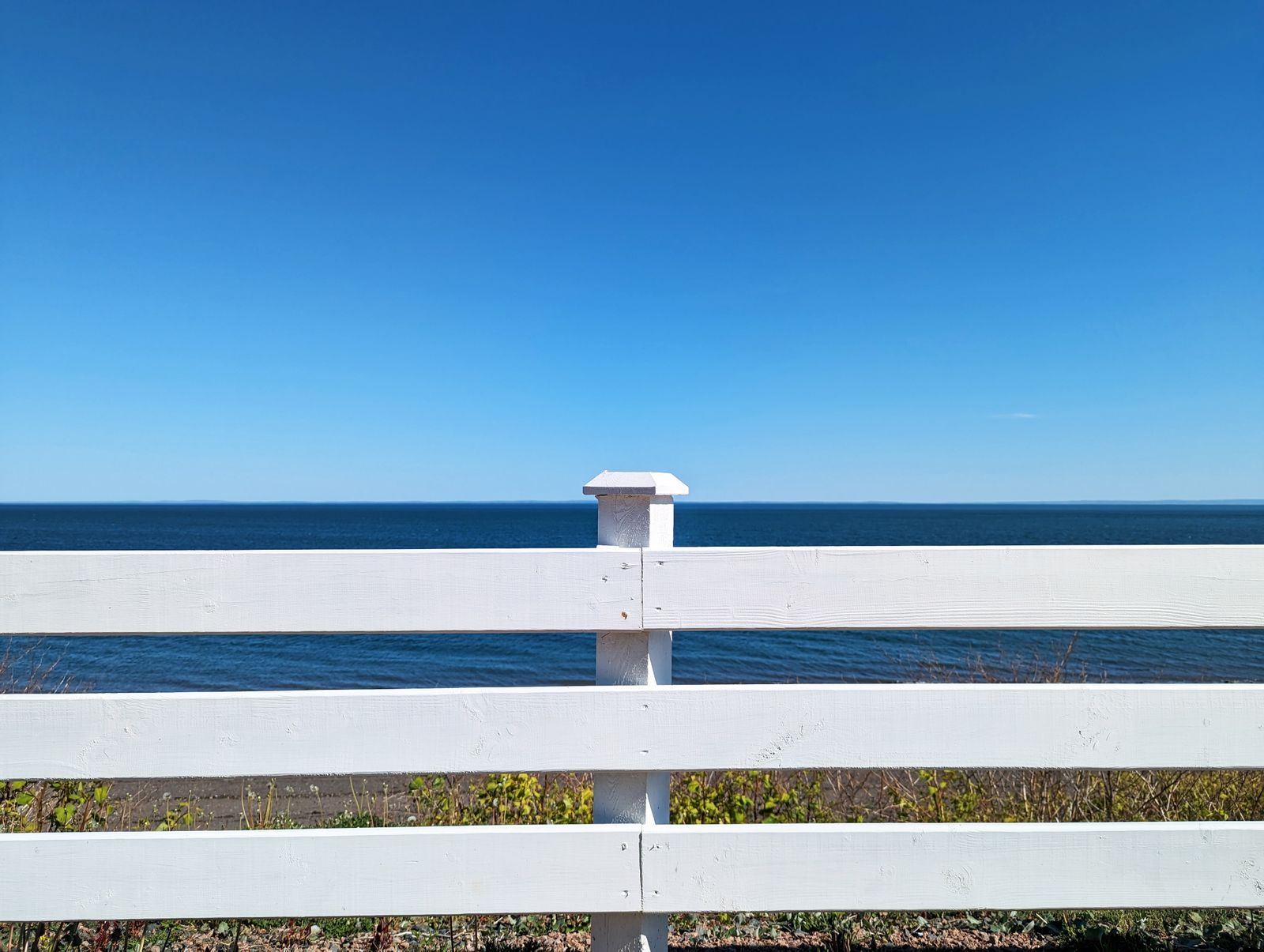
Lighting a Corner Lot: How to Handle Two Street-Facing Fences
A corner lot is not one fence lit twice. It is two public elevations that meet at a single post, and that meeting point is what the eye reads first from the intersection. Treat the corner post as the anchor, plan each run outward from it, and accept that the two runs will not receive the same sunlight or compete with the same streetlights.
Why a corner lot behaves differently from a straight boundary
On an interior lot you have one face to the street and everything else is private. On a corner you have two faces, they are seen together from the crossing, and they are seen separately by drivers approaching along each road. That triples the number of viewpoints that matter and it means a decision that looks fine from your driveway can look unbalanced from the opposite corner.
The other difference is orientation. Two runs at ninety degrees to each other face two different compass directions, so one will get meaningfully more direct sun than the other across the day. Since each cap charges independently from its own lid over six to eight hours of full and direct sunlight, the two sides of a corner lot are effectively two different solar environments on the same property.
Start at the corner post and work outward
Photo by Phát Trương on Pexels
The corner post is the only post visible from both streets and from the crossing itself. It is the natural anchor, and it deserves a cap before anything else does. Everything you decide afterward is a decision about how the two runs relate to that anchor.
There are two coherent approaches, and mixing them is what produces a messy result.
| Approach | How it works | Best when | |---|---|---| | Corner emphasis | Cap the corner post, then the posts immediately either side of it, and leave the far ends of both runs dark | The lot is large, the runs are long, and you want a defined turn rather than a lit perimeter | | Even rhythm | Cap posts in a consistent repeating pattern along both runs, corner included | Both runs are short enough to finish, and you want the whole frontage to read as one boundary | | Endpoint marking | Cap the corner and the two outer ends of the runs only | You mainly want the extent of the property legible to drivers and visitors |
Pick one and hold it. Whichever you choose, the corner post is capped in all three, which is the point.
Handling two runs of different lengths
The usual awkwardness on a corner lot is that one frontage is long and one is short. Matching the number of caps on each run makes the short side look crowded. Matching the visual pattern instead makes both sides look intentional even when the counts differ.
In practice that means keeping the same relationship between lit and unlit posts on each run rather than the same total. A six pack of caps covers a corner and two modest frontages comfortably. On a long plus short pairing, weight the caps toward the corner and the outer end of each run, and let the middle of the long run stay dark. A dark stretch in the middle of a long fence reads as a deliberate gap. An unlit corner reads as a fault.
Two orientations, two charging outcomes
This is the part that catches people out and it is worth planning for rather than discovering in November. One run of a corner lot might face south or west and get strong direct sun through the afternoon. The other might face north or east and sit in the shadow of the house for half the day.
Expect the shadier run to light for a shorter period each night, particularly in winter. This is not a defect and no amount of swapping units fixes geography. What helps is practical: keep the lids on the shaded run clean more often, since a partial charge plus a dusty panel is what tips a cap into quitting before midnight, and rotate caps between the sunny and shady runs across the year so wear spreads evenly across the set. If part of your line consistently underperforms, the diagnostic sequence in the guidance on optimizing a post cap line for perimeter reliability applies directly.
Street trees deserve a specific mention. Corner lots often have a mature tree in the verge right at the crossing, which is precisely where your anchor post is. If the corner post sits under a canopy, either trim what you are permitted to trim or move the emphasis to the first post along each run instead.
Competing with a streetlight on one side
Most intersections have a streetlight, and it is usually much brighter and much cooler in color than a 15 lumen warm white cap. On the run nearest that pole, your caps will not be the brightest thing in view and should not try to be. What they do instead is define the property line at a human scale and add warmth against a cold overhead wash.
The useful consequence is where to put your effort. Concentrate caps on the frontage that is furthest from the streetlight, because that is where low-level warm light does the most visible work. On the lit side, cap the corner and the ends and leave it at that. For the wider argument about what perimeter lighting does for how a property presents, the piece on how post cap lights affect home value and safety is a useful companion.
A layout procedure for a corner lot
Photo by Yasin Aydın on Pexels
Being a good neighbor at an intersection
Corner properties are more exposed than any other lot on a street, and low warm output is an advantage there. Each cap emits 15 lumens across a 360 degree angle from the top of a post, so it is visible as a soft point of light rather than a beam aimed at the road or at the house opposite. That matters at a crossing, where anything glaring toward a driver at eye level is a genuine problem rather than an aesthetic one. Keeping output low and warm is what lets you light two public frontages without becoming the house people complain about. Broader placement ideas for both runs are collected in the guide to outdoor deck and fence lighting.
FAQ
Should both frontages have the same number of caps? No, unless the runs are the same length. Match the visual pattern rather than the count, and weight caps toward the corner and the outer ends of each run so the two sides read as one deliberate boundary.
Which post should I light first if I only have a few caps? The corner post, then the post immediately either side of it. That trio defines the turn, which is the part of a corner lot that is seen from every direction.
Why is one street side always dimmer at night? Because it faces a different direction and gets less direct sun during the day. Each cap charges from its own panel, so a shaded run genuinely stores less energy. Clean those lids more often and rotate units between the two runs seasonally.
Will caps be visible next to a bright streetlight? Visible, yes, but not dominant. Warm light at post height still defines the fence line under a cold overhead lamp. Put your remaining caps on the frontage furthest from the pole where they do more work.
What to do next
Take the dusk photograph from the opposite corner before you buy anything. It will show you which frontage is genuinely dark and which one the streetlight already handles, and that single image usually decides how many caps each run needs and where the first three go.
Cover photo by Bogdan Krupin on Pexels.