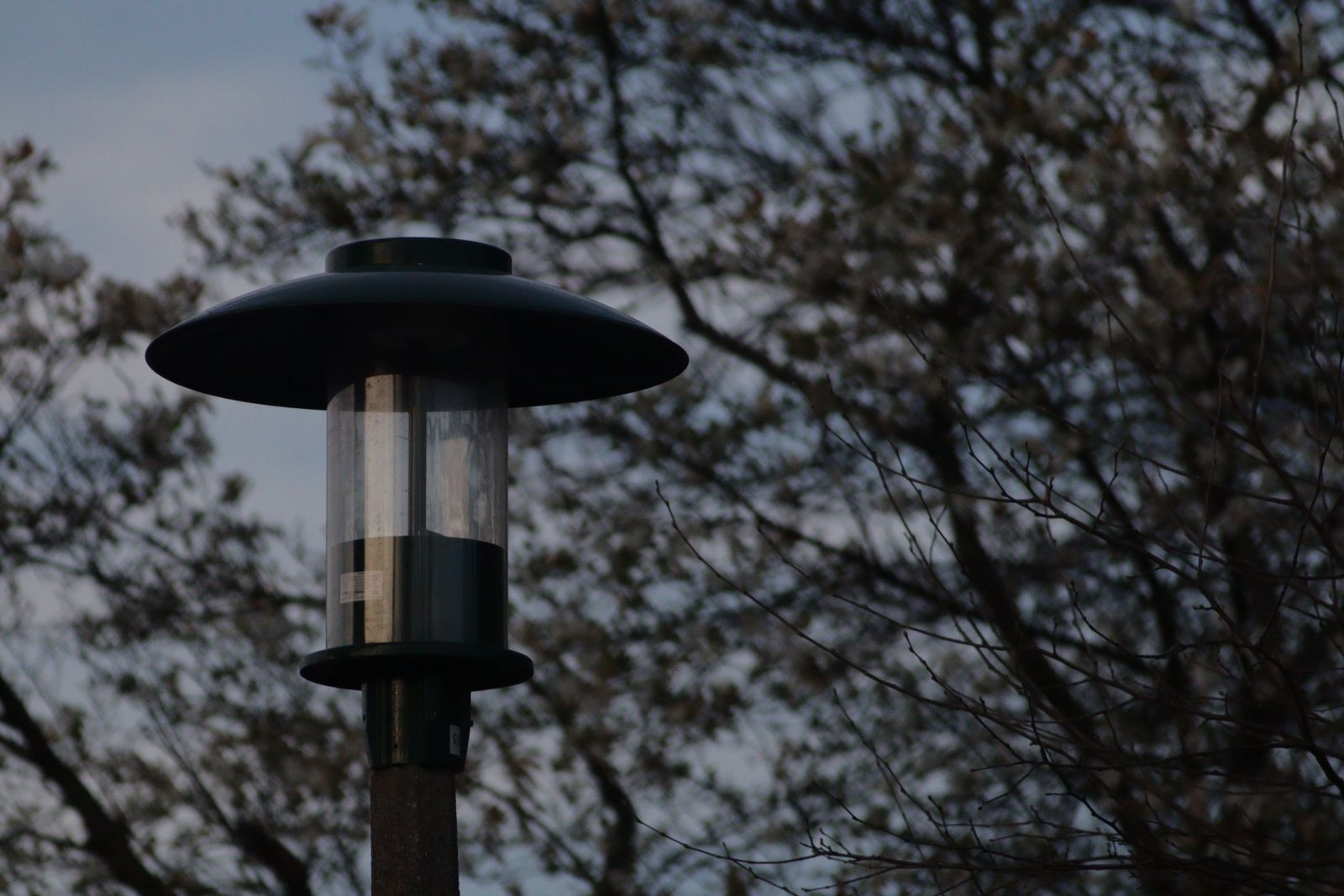
Dusk-to-Dawn Sensor Optimization & Placement Guide for Perimeter Solar Post Lights
Many homeowners assume non-illuminating solar post lights have dead batteries, but most failures stem from ambient light blinding the dusk-to-dawn photocell. If nearby streetlights, porch fixtures, or adjacent caps spill more than 10–15 lux onto the sensor, the light remains off. Isolate the fixture in complete darkness to confirm photocell operation before replacing batteries or fixtures.
Perimeter Fence Light Interference & Spacing Diagram
Review this visual layout to understand how 15-lumen light cones overlap and where high-intensity artificial light sources create sensor blind zones along your fence boundary.
Sensor Failure Scenarios: Environmental vs. Hardware Causes
Photo by Wijs (Wise) on Pexels
Cross-Beam Sensor Blinding — Space adjacent solar post caps at least 6 feet apart. When 15-lumen caps are placed too close together, the warm white glow from one cap trips the photocell on the neighboring fixture.
Streetlight or Floodlight Spillover (>15 Lux) — Relocate the affected post cap to a darker section of the fence, or install an angled light shield on the side facing the external fixture to block direct high-lux rays.
Eave & Canopy Shading Shift — Ensure the top solar panel receives 6–8 hours of direct, unshaded sunlight daily. Relocate post caps positioned beneath deep roof overhangs or heavy evergreen foliage.
Dirty or Oxidized Photocell Lens — Clean the top housing quarterly with a damp microfiber cloth to remove dust, pollen, and hard water mineral spots that obscure the photocell daylight sensor.
Identify the environmental or physical scenario causing your solar post cap light sensors to misfire.
Top 4 Mistakes That Trip Solar Post Photocells
Avoid these standard installation errors when setting up perimeter solar post lights:
Dusk-to-Dawn Sensor Troubleshooting Flowchart
- Does the light turn on when the top solar panel is completely covered with an opaque cloth in daylight? → Yes: The photo-sensor, switch, and battery are functional. High ambient light at night (>15 lux) is blinding the sensor.. No: Proceed to internal power check.
- Is the master toggle switch beneath the cap set to the 'ON' position? → Yes: Proceed to battery testing.. No: Toggle switch to ON and place fixture in direct sunlight for 6 to 8 hours.
- Does the internal AA 1000mAh Ni-MH battery show >1.2V on a multimeter or operate in another tested fixture? → Yes: Solar panel surface may be severely oxidized or internal photocell wire is shorted.. No: Replace the depleted AA Ni-MH rechargeable battery.
Photocell Diagnostic Matrix: Symptoms, Root Causes & Fixes
| Operating Scenario / Symptom | Primary Root Cause | Field Diagnostic Check | Corrective Action |
| --- | --- | --- | --- |
| Light flickers rapidly at twilight | Ambient light spill is hovering exactly at the 10-15 lux activation threshold | Check ambient lux at post cap elevation during dusk using a light meter | Increase post cap spacing to >6 feet or install a side optical shutter |
| Light remains completely off at night | Photocell blinded by external light OR master switch set to OFF | Perform 30-second daylight dark-box cover test | Toggle switch ON or shield photocell from direct streetlight illumination |
| Light turns off after 1–2 hours | Insufficient daytime solar charging or degraded 1000mAh Ni-MH battery | Inspect shadow patterns over post top between 10 AM and 4 PM | Prune overhanging branches or replace internal AA Ni-MH rechargeable battery |
| Light turns on during overcast daytime | Heavy surface grime, sap, or pollen buildup over the photocell lens | Inspect solar panel surface for cloudy oxidation film | Wipe clean with a microfiber cloth and mild warm water |
Use this scenario matrix to diagnose specific lighting symptoms along your deck or fence line.
Visual Gallery: Correct vs. Incorrect Perimeter Light Placement
Examine these real-world mounting positions to optimize sun exposure and prevent artificial ambient light lockout.
Actionable Next Steps for Perimeter Light Optimization
Your decision: Identify whether your post light issue is caused by high ambient light (sensor blinding) or low battery charge state.
Do this next: Perform the 30-second dark-box test by covering the top solar panel entirely with an opaque cloth in broad daylight.
Related resource: Download our Printable Perimeter Sensor Checklist for your fence installation toolkit.Upgrade to our 6-Pack Solar Post Cap Lights with calibrated auto dusk-to-dawn sensors and multi-size mounting bases.
Take these primary diagnostic actions to restore automatic dusk-to-dawn lighting functionality.
Key Takeaways for Photocells & Boundary Placement
Keep these essential principles in mind when troubleshooting or installing solar fence cap lights:
Printable Perimeter Sensor Checklist & Field Reference
- 1. Perform a 30-second dark-box test in broad daylight to verify LED and battery operation.
- 2. Clean the top solar panel face quarterly with a microfiber towel and fresh water.
- 3. Maintain 6 to 8 feet of spacing between adjacent solar post cap lights along fence lines.
- 4. Ensure high-intensity artificial light sources (floodlights) remain at least 15 feet away from sensors.
- 5. Confirm the fixture receives 6-8 hours of direct, unshaded sunlight to fully charge the 1000mAh battery.
Perimeter Sensor Interference Diagnostic Tool Brief
Photo by Serena Koi on Pexels
Use this specification outline to calculate light spillover and setback distances along property lines.
Comparison: Photocell Masking Materials & Calibration Techniques
| Calibration / Masking Method | Target Operational Problem | Light Charging Impact | Durability & Weather Resistance | Recommended Usage Scenario |
| --- | --- | --- | --- | --- |
| Physical Repositioning | Severe streetlight or floodlight beam overlap | Zero impact (maintains 100% solar panel daylight access) | Permanent structural fix | Best method for open fence lines with severe external light spill |
| Angled Optical Shutter / Shield | Directional beam glare from a single porch fixture | Minimal impact (blocks side light angles only) | High (UV-resistant plastic or powder-coated metal) | Ideal when deck post locations are fixed and cannot be moved |
| 20% Neutral Density Optical Film | Photocell triggering too late in deep twilight | Negligible (<5% reduction restricted to sensor aperture) | Moderate (requires exterior UV-rated optical film) | Use when photocell turns on late despite quiet, dark surroundings |
| Black Electrical Tape (Incorrect) | User attempting to force daytime illumination | Severe failure (100% loss of daytime solar charging) | Low (melts in high heat and leaves sticky residue) | DO NOT USE: Destroys battery recharging capability |
Compare methods for adjusting hyper-sensitive dusk-to-dawn sensors without compromising battery charging capacity.
Expert Field Tip: The 30-Second Dark-Box Test
You do not need to wait until nightfall to test a non-responsive solar post light. In broad daylight, cover the entire solar panel cap with an opaque cardboard box or thick bath towel for 30 seconds. If the 8 warm white SMD LEDs illuminate brightly, your solar cell, internal switch, and 1000mAh Ni-MH battery are completely functional—confirming that external ambient light at night is blinding the photocell sensor.
Related Perimeter & Battery Optimization Guides
- Solar Light Auto-Sensor FAQ: Fixing Dusk-to-Dawn Light Sensitivity Issues
- Solar Post Cap Light Brightness FAQ: Lumens, SMD LEDs, and Coverage Answered
- Nominal vs. Actual Post Sizing & Multi-Base Adapter Fit Matrix
Frequently Asked Questions About Solar Photocell Sensors
Get expert answers to common photocell sensor and battery diagnostic questions.
Recommended Solution: 6-Pack Waterproof Solar Post Cap Lights
Upgrade your property boundaries with modern solar post cap lights built with precise dusk-to-dawn sensors, multi-size adapter bases, and high-output 15-lumen warm white SMD LEDs.
Final Steps: Restore Automatic Dusk-to-Dawn Illumination
Your decision: Determine whether ambient artificial light spill or battery depletion is interrupting your night illumination.
Do this next: Perform the 30-second daylight dark-box test on all non-illuminating post caps.
Related resource: Review our complete post cap mounting and base size adapter guide.
Ready to transform your fence or deck line with hassle-free automatic lighting? Explore our 6-Pack Solar Post Cap Lights, engineered with 15-lumen brightness, multi-base adapters, and reliable dusk-to-dawn sensors.
Follow this checklist to complete your perimeter lighting optimization:
Cover photo by Gergő Køvács on Pexels.