
Matching Solar Post Cap Lights Across Old and New Fence Sections
When part of a fence has been replaced and part is original, the lights will look mismatched unless you plan for three differences: post size drift, post height drift, and color drift between weathered and fresh material. The fix is to measure every post top individually rather than assuming a run is uniform, then choose a light body and warm color temperature that reads the same against both old gray wood and new bright wood. A single identical light on every post, spaced evenly across the boundary between sections, hides more mismatch than any attempt to match the posts themselves.
Why replaced fence sections rarely line up with the old ones
Fence repairs happen one storm at a time. A contractor pulls three rotten posts, sets new ones, and the run continues — but the new posts almost never match the old ones exactly. Lumber shrinks as it dries, so a post set fifteen years ago may now measure noticeably narrower than the post that replaced it, even though both were sold under the same nominal size. Concrete footings get poured at slightly different depths, so post tops sit at different heights. And vinyl sleeves from a different production run can be a half-shade off the original white.
None of this matters much in daylight, when the eye reads the fence as one object. It matters at night, because a line of lights is a line of reference points. Two lights at different heights, or one warmer than its neighbor, is immediately visible from thirty feet away. Lighting a mixed-age fence is therefore less about the fence and more about controlling what the lights themselves do.
Measure every post top, not one post per section
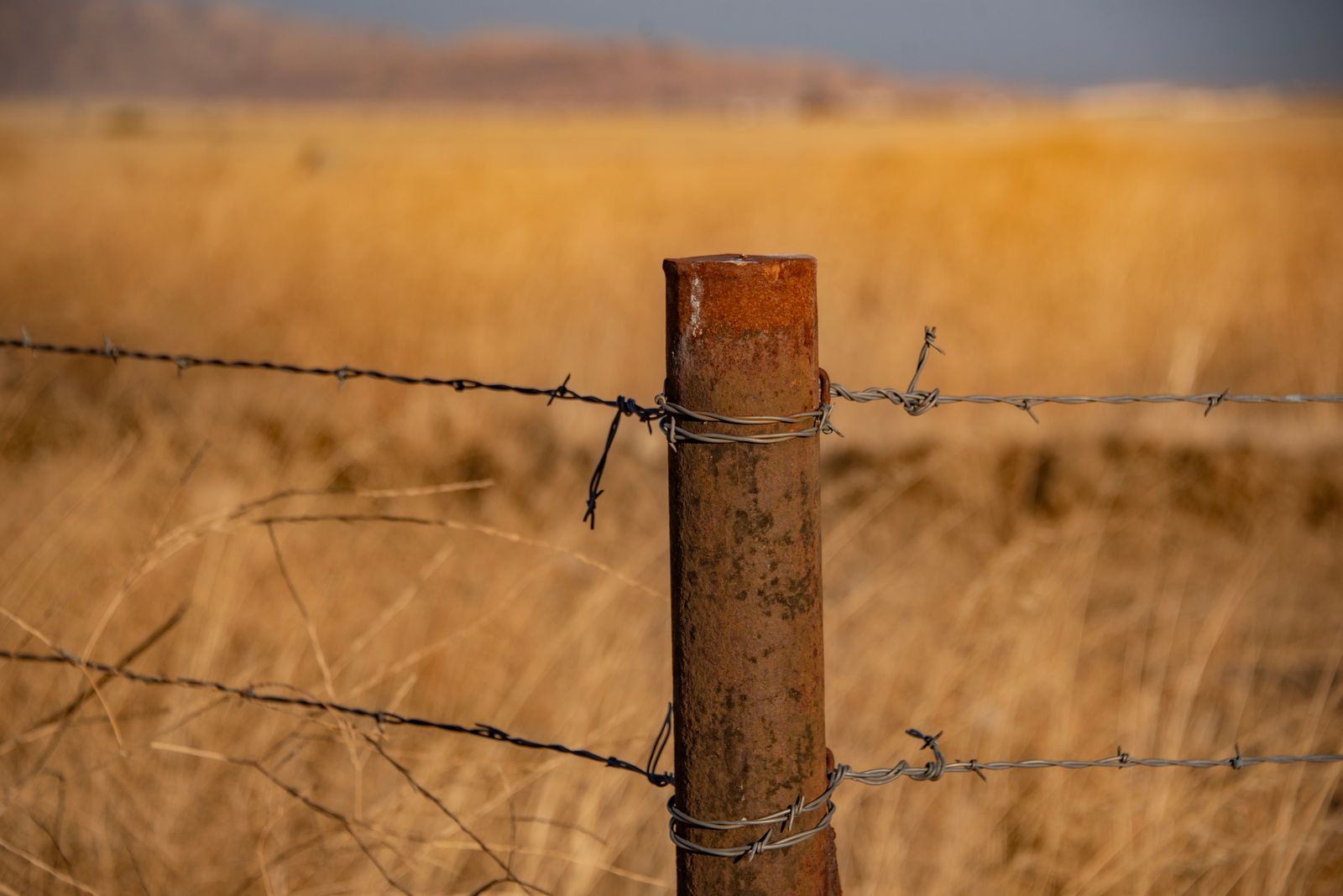
Photo by Circe Denyer on Pexels
The single most common failure on a repaired fence is buying based on one measurement. Post tops on a mixed run frequently fall into two or three different true sizes, and a cap that seats correctly on the newer posts will rock or sit proud on the older ones.
Do this before ordering anything:
Solar Post Cap Lights are supplied as a 6 pack with different sizes of bases included, and the manufacturer lists compatibility with any standard true size of 3.5" x 3.5", 4" x 4", 4.5" x 4.5", 5" x 5", and 5.5" x 5.5" wood, vinyl, or plastic post cap. On a mixed-age fence, that range is the reason a single purchase can usually cover both the old and the new posts — you are matching each base to its own post rather than forcing one size across the run. Our complete guide to choosing and installing solar post cap lights covers the seating step in more detail.
Old wood versus new wood versus vinyl: what changes at night
| Post condition | What the eye notices at night | Practical adjustment | |---|---|---| | Weathered gray wood | Absorbs light; the post itself stays dark | Warm light reads well; no change needed | | Fresh pressure-treated wood | Slight green or yellow cast, reflects more | Avoid cool white, which exaggerates the green | | New cedar or redwood | Strong red-brown bounce under warm light | Looks intentional; often the best-looking result | | White vinyl sleeve | Reflects heavily, acts as a second light source | The brightest-looking post in the run | | Tan or gray composite | Neutral, minimal bounce | Reads darker than vinyl beside it |
The takeaway is that a white vinyl post will always look brighter than a weathered wood post using the identical light, because the post is doing the reflecting. If your repaired sections are vinyl and your original sections are wood, expect the vinyl half to look brighter and plan the layout so the transition happens at a corner or a gate rather than mid-run, where the step change is obvious.
Why warm white does more work on a mixed fence
Color temperature is the strongest tool you have for unifying a fence with two ages of material. Warm light compresses the visible difference between gray and fresh timber, because it puts less blue into the scene and blue is what makes new pressure-treated lumber look green and old lumber look washed out. Each light here uses 8 warm white SMD LEDs, and the 360 degree viewing angle means the glow spreads around the cap rather than throwing a single directional beam that would spotlight one post face and leave the next in shadow.
Brightness is set at 15 lumens per light, which the manufacturer describes as 3 times brighter than general solar garden lights. On a mixed fence that level is useful precisely because it is a marker light rather than a floodlight: it defines the line of the fence without lighting the post surface hard enough to show every difference in grain and weathering. If you are weighing color temperature for a specific setting, see why warm white suits a deck.
Spacing choices that hide a repair
Photo by Magda Ehlers on Pexels
Even spacing beats logical spacing on a repaired fence. If you light every post in the new section and every other post in the old section, the change in rhythm draws the eye straight to the repair. Pick one interval and hold it across the whole boundary, even if that means an unlit post on both sides of the join.
Corners and gate posts are the exception worth making. Those are the points people navigate by, and lighting them consistently — including the gate posts on both the old and new sides — makes the fence read as one continuous structure. For layout patterns across a full perimeter, our guide to optimizing post cap lights for perimeter reliability walks through interval planning.
When one pack is not enough
A 6 pack covers a short run or a single elevation. Mixed-age fences are often long, so work out coverage before you buy:
- Count the posts you intend to light at your chosen interval, not the total posts you own.
- Add the corner and gate posts, which should always be lit.
- Buy in whole packs so the spare bases from each pack stay available for future post replacements.
- Keep two or three unused bases in the garage. When the next post gets replaced at a different size, you will already have the base that fits it.
FAQ
Should I replace the caps on the old section so everything matches? Usually not. Replacing decorative caps on sound posts is cost without benefit, since the light body sitting on top is what people see at night. Match the lights and let the posts be different ages.
My old posts have split, domed tops. Will a cap still sit on them? A badly domed or split top will not let any flat base seat squarely. Trim the top flat with a hand saw or a circular saw before fitting, which also removes the most rotted wood and gives the base a clean bearing surface.
Do vinyl-sleeved posts need different handling than solid wood? The base fits the same way, but a hollow vinyl sleeve gives fasteners nothing solid to bite into. Fitting into the wood post inside the sleeve, or into a block set in the sleeve, is the reliable approach. Our guide to solar cap lights on vinyl fencing covers this.
Will the new posts and old posts charge at different rates? Charging depends on sun exposure at that spot, not post age. A post shaded by a mature tree in the old section will run shorter than an exposed post in the new section, which is a placement question rather than a matching one.
The practical next step
Walk the fence with a tape measure and a pencil and record the true top size of every post you plan to light. That single sheet of numbers tells you how many bases of each size you need, which posts need their tops trimmed flat first, and where the material transition falls — everything you need to order once and fit the whole run in one afternoon.
Cover photo by Michael Morse on Pexels.