Do Solar Fence Lights Attract Bugs or Disturb Wildlife?
Fence lights do attract some insects, but far fewer than a porch light or a floodlight, and the reasons are physical rather than a matter of luck. Insect attraction rises with brightness, with blue and ultraviolet content in the light, and with how high the light sits above the ground. Low-output warm white marker lights mounted on post tops sit at the favorable end of all three variables, which is why they draw noticeably less activity than a bright cool-white fixture on a wall.
Why do lights attract insects at all?
Many night-flying insects navigate using distant light sources, and a nearby artificial light overwhelms that system. Moths in particular orient at a fixed angle to what they read as a far-off reference, so a close light source sends them into the tightening spiral people recognize as "bugs circling the porch light."
The strength of that pull is not uniform across light sources. Two properties dominate. The first is spectrum: insect eyes are most sensitive to ultraviolet, violet, and blue wavelengths, and much less sensitive to the orange and red end. The second is intensity, because a brighter source is visible from further away and recruits insects from a larger area. A dim, warm source is therefore a weak attractant on both counts at once.
Does warm white really draw fewer bugs than cool white?
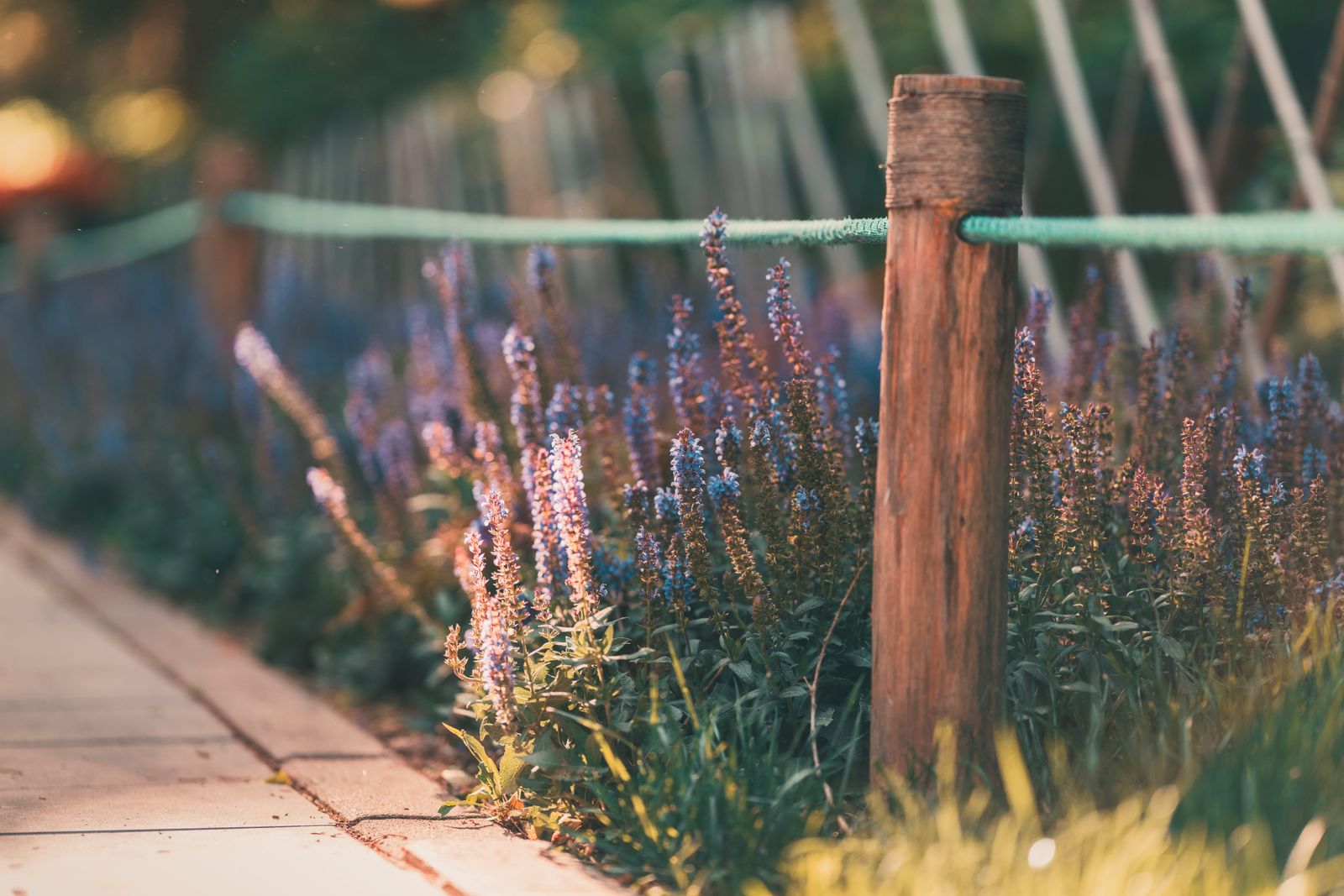
Photo by zhang kaiyv on Pexels
Yes, and this is the most useful single decision in outdoor lighting if insects bother you. Warm white light has less of its energy in the short blue wavelengths that insect vision responds to most strongly, so the same physical amount of light produces less attraction. Cool white and daylight-white fixtures push more energy into exactly the band insects detect best.
Each Solar Post Cap Light uses 8 warm white SMD LEDs, which places it on the low-attraction side of that spectral divide. It is worth being straightforward about the limit: warm white reduces insect attraction, it does not eliminate it. Some species respond to warm sources, and any light at all in a dark yard will register with something. The realistic expectation is a light you can sit near without a cloud around it, not an insect-free yard. Our discussion of why warm white suits a deck covers the visual side of the same choice.
How much does brightness change insect activity?
A great deal, because attraction scales with how far away the light can be seen. Solar Post Cap Lights are rated at 15 lumens each, which the manufacturer describes as 3 times brighter than general solar garden lights. That figure is still a marker-light level of output — enough to show where a post is and to trace the line of a fence, and far below a wall-mounted security fixture.
Here is the practical hierarchy in a typical backyard, from most to least insect activity:
- A bright cool-white floodlight on a wall, drawing insects from well beyond the property line
- A standard warm porch light left on all evening, concentrating activity at a doorway
- String lights hung at head height, which put light directly into the space people occupy
- Low-output warm post cap lights, spread out along a boundary at post-top height
- No lighting at all
Does placement on the fence line help?
It helps considerably, and it is the reason boundary lighting is a good strategy for anyone who eats outside. Insects gather where the light is. Putting your lighting on the perimeter rather than on the patio moves that gathering point away from the table.
| Lighting location | Where insects concentrate | Effect on seating area | |---|---|---| | Fence and boundary post tops | At the property edge | Seating area stays comparatively clear | | Deck rail posts | At the rail, near people | Noticeable at the table's edge | | Overhead string lights | Directly above the table | Most intrusive of the common options | | Wall-mounted floodlight | At the house wall and door | Insects follow you indoors |
A simple version of this: light the fence, keep the table dim. The eye adapts quickly, and a perimeter of small warm lights gives enough spatial reference that most people stop noticing the table is not directly lit.
What about wildlife other than insects?
Photo by Elisanette Ortiz on Pexels
Artificial light at night affects more than moths, and it is worth being honest about the mechanisms rather than dismissing the question.
Nesting birds respond to light cues for dawn song and can shift their timing under prolonged illumination. Bats feed on insects and some species avoid lit areas, which changes where they hunt. Amphibians and small mammals use darkness as cover and will alter their routes around lit ground. Fireflies are the case most people notice personally, because their signaling depends on genuinely dark conditions and bright yard lighting can interrupt it.
The variables that matter for all of these are the same ones that matter for insects, plus one more: duration. Light that runs all night has more effect than light that runs for part of the evening. Three practical adjustments cover most of it:
Do solar lights turn themselves off, and does that matter?
It matters because runtime is the duration variable. Solar Post Cap Lights use an automatic on/off sensor, so they come on at dusk without a switch and run on the charge stored in the included 1000mAh NI-MH AA rechargeable battery. When that stored charge is used up, the light goes out.
That behavior is an advantage for wildlife rather than a shortcoming. A solar marker light naturally produces a bright early evening and a dark late night, which is closer to the light regime local species evolved with than a mains-powered fixture that burns at full output until sunrise. The included battery is charged by full and direct sunlight over 6-8 hours, so runtime tracks the season — shorter in winter, when nights are longest.
FAQ
Will fence lights make a mosquito problem worse? Mosquitoes locate people mainly by carbon dioxide, body heat, and scent, not by light, so lighting the fence has little effect on them either way. Standing water within a hundred feet or so is the variable that actually drives mosquito numbers. Removing water from saucers, gutters, and tarps does far more than any lighting change.
Do these lights work as a bug zapper or repellent? No. They are decorative and wayfinding lights with no insect-control function of any kind. Devices marketed as zappers use ultraviolet output specifically to attract insects, which is the opposite of what warm white lighting does.
Will spiders build webs on the lights? Often, yes, because spiders build where insects fly. It is a maintenance item rather than a problem: a web across the top of a cap can shade the panel and shorten runtime, so brushing the tops off every few weeks during summer keeps output steady.
Is there a way to keep the fence lit and still see fireflies? Light one side of the yard and leave the other genuinely dark, ideally the side with the longest grass or the most shrub cover, since that is where fireflies signal. Fewer lit posts at a wider interval also helps, and it looks deliberate rather than sparse.
The practical next step
Walk your yard after dark and note where insects are already gathering — it will be at your brightest existing fixture. Move the lighting job to the boundary with low warm output, leave one corner of the yard unlit, and the activity will follow the light away from where you actually sit.
Cover photo by Jose Antonio Gallego Vázquez on Pexels.