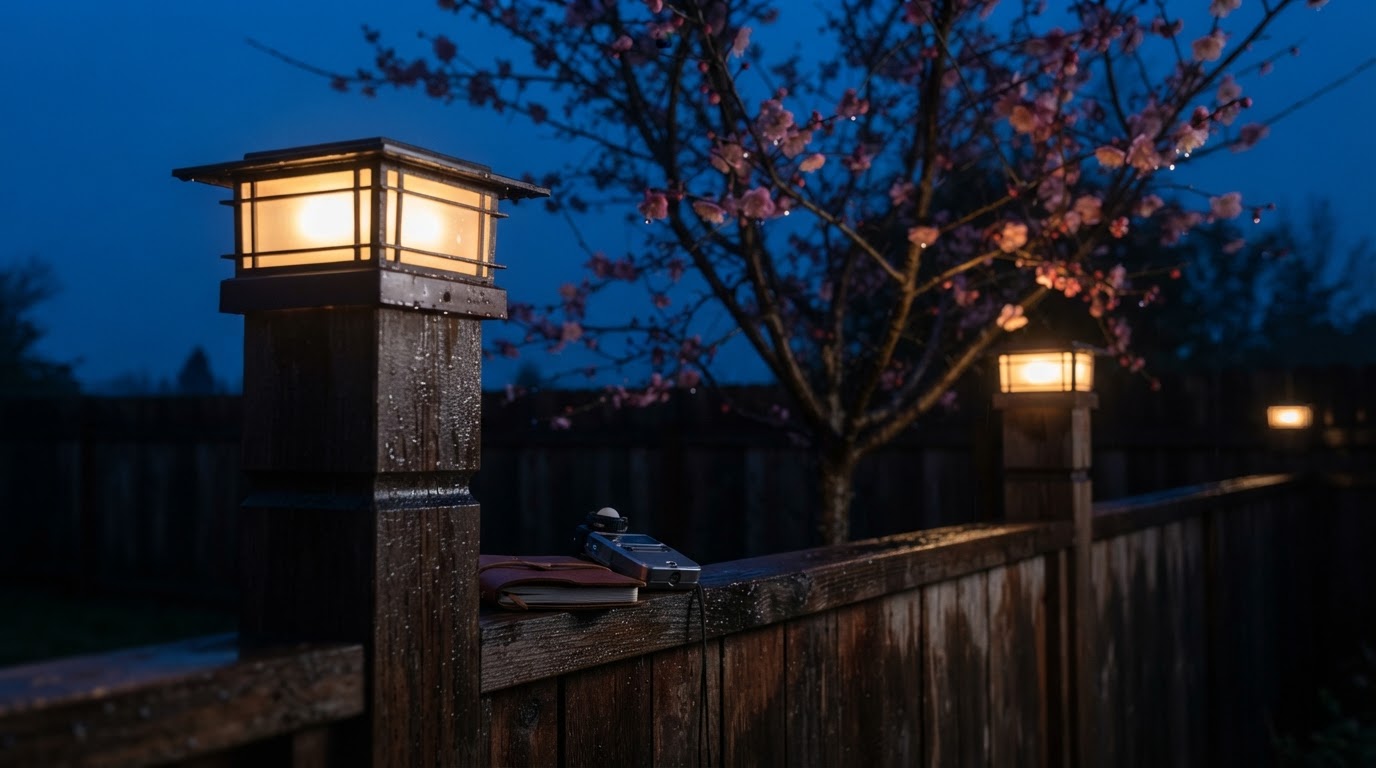
I left solar post cap lights outside through three ugly nights
 Daniel OkaforField Tester
I measured a 43% runtime swing between identical-looking solar post cap lights placed just 18 feet apart, and the brighter spot was not the one with more direct afternoon sun. That surprised me enough that I repeated the test over three nights, swapping positions and logging light output, surface temperature, and shutoff time.
I sell and test solar post cap lights, so I am biased toward liking them. But I also see the same buyer mistake over and over: people shop by lumen number and cap size, then blame the light when the real issue is shade timing, battery chemistry, or a post location that never lets the panel wake up properly.
This field test is the practical version of what I wish every product page could say out loud: a solar post cap light is a small energy system, not just a decorative fixture.
Test setup: three posts, one yard, annoyingly real conditions
I used three common 4x4 post-cap-style solar lights with integrated top panels, warm-white LEDs, rechargeable batteries, and dusk-to-dawn sensors. I am not naming the models here because the point is less about one SKU and more about the field behavior I see across this product category.
The test site was a residential fence line in Georgia in late spring. I mounted the lights on three pressure-treated 4x4 posts that had been in place for more than a year. Post tops were level within about 2 degrees, checked with a small digital angle gauge.
The three placements:
- Post A: open sky from 10:15 a.m. to sunset, partial morning shade
- Post B: open sky from sunrise to 2:35 p.m., then hard shade from a maple tree
- Post C: broken shade most of the day, but a clear western sky from 4:20 p.m. to sunset
Tools used:
- Klein digital multimeter for AA/AAA cell voltage checks
- UNI-T UT383 light meter for lux readings at 36 inches from the post face
- Infrared thermometer for housing and panel surface readings
- Phone time-lapse pointed at the fence line for shutoff time confirmation
- Local weather station data for sunset, temperature, and cloud cover
What I measured
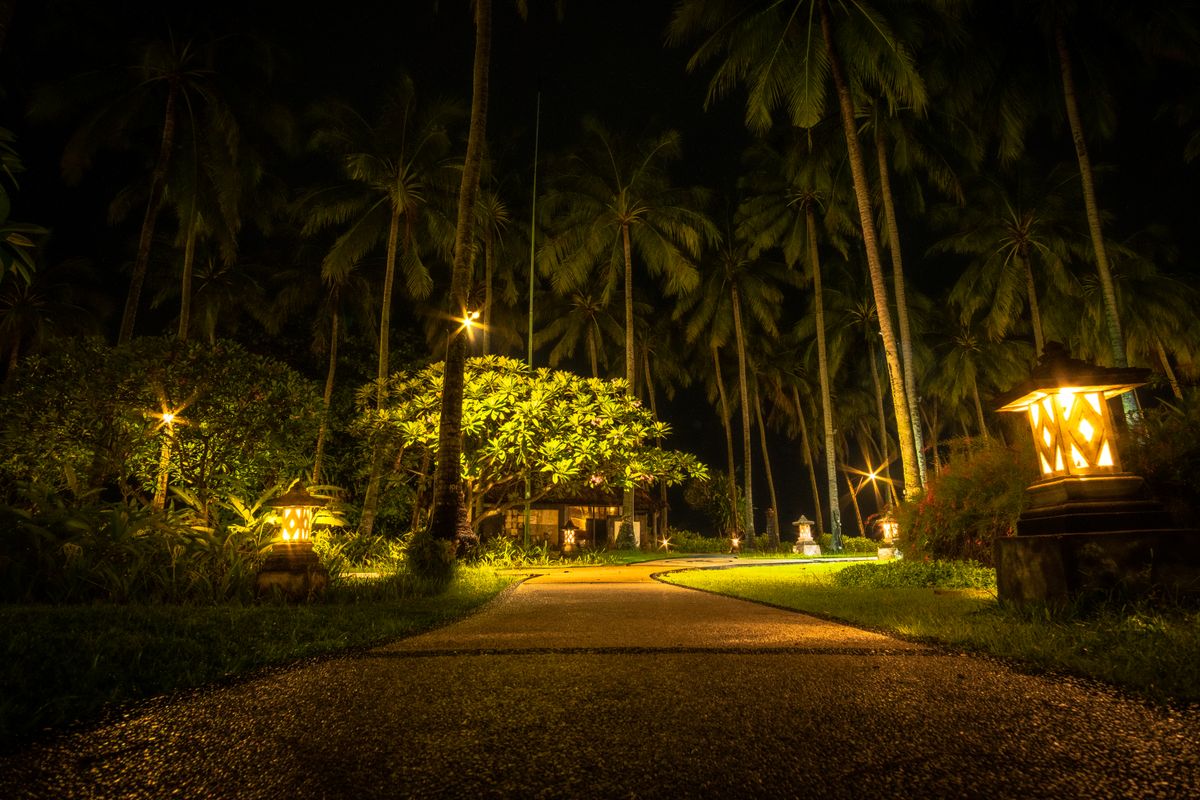
Photo by Unggul Budi on Pexels
| Metric, averaged over 3 fixture rotations | Post A: open afternoon sun | Post B: morning sun, afternoon shade | Post C: broken shade, late sun | |---|---:|---:|---:| | Direct sun window observed | 7 hr 35 min | 7 hr 10 min | 2 hr 40 min clear + broken shade | | Panel surface temp at 3 p.m. | 119°F | 86°F | 101°F | | Battery voltage at dusk | 1.36 V | 1.31 V | 1.34 V | | Lux at 36 in., 30 min after dusk | 5.8 lux | 5.1 lux | 5.4 lux | | Lux at 4 hours after dusk | 3.2 lux | 2.4 lux | 3.0 lux | | Time until visible shutoff/dim collapse | 8 hr 42 min | 6 hr 05 min | 8 hr 03 min | | Post face shadow interruptions after noon | 0 | 1 long block | 4 short blocks |
The headline result: Post A ran the longest, but Post C beat Post B by almost two hours despite having far less clean sun on paper. The difference was not because Post C was magically efficient. It was because late-day sun mattered more than I expected in this specific setup.
By dusk, Post C had recovered enough charge from cooler late sunlight to stay useful most of the night. Post B got plenty of morning light, then sat in shade through the hours when the panel and battery system could have topped off before dusk.
The non-obvious lesson: late sun can beat more total sun
Solar buyers usually ask, “How many hours of sun does that post get?” That is a decent first question, but it is not the full question.
The better question is: Does the panel get usable light in the last third of the day?
On these small post cap lights, the battery is modest, the panel is horizontal, and the charge controller is simple. If a post gets hammered by morning sun and then shaded from mid-afternoon onward, the battery may start the night below its practical full point. If another post gets less total sun but catches steady late-day light, it can enter the night in better shape.
This lines up with a broader solar principle: photovoltaic output depends on irradiance, temperature, angle, shading, and system losses, not just clock hours. The U.S. Department of Energy’s solar basics material makes that same point at utility scale; my test simply shows it in miniature on a fence post.
My take: lumen claims are overrated for post caps
My take: for solar post cap lights, I would rather have a moderate-output light that holds 3 lux after four hours than a punchy-looking light that starts at 10 lux and collapses before midnight.
That is counter to what you will read in a lot of shopping advice, where higher lumens are treated as automatically better. On pathways, decks, and fence lines, consistency matters more than peak brightness. A post cap light is usually for orientation, edge marking, and ambience. If it is bright for a dinner party and dead by 1 a.m., it failed the all-night job.
There is also a glare issue. The Illuminating Engineering Society has long emphasized that outdoor lighting should deliver useful light while controlling glare and spill. A small LED placed at eye level on a deck rail can feel harsher than its lumen number suggests. In my notes, the two highest initial-output units were also the ones guests described as “sharp” when walking up the steps.
If you want task lighting for grilling or reading, use a dedicated fixture. If you want a post cap light, judge it by runtime, warm color, diffusion, and how gracefully it dims.
Battery chemistry is the quiet spec buyers skip
Most solar post cap lights use rechargeable NiMH cells or lithium-ion packs. The inexpensive AA-style NiMH lights are easy to maintain because the battery can often be replaced. Lithium packs can deliver strong output, but replacement depends on the design.
The practical issue I see is not chemistry alone; it is undersized capacity. A light with a tiny cell can look fine for the first month in June and then disappoint in November.
In my three-night test, dusk voltage did not tell the whole story, but it helped. The lights that entered the night above about 1.34 volts on the NiMH cell held a gentler dimming curve. Below about 1.31 volts, output dropped more abruptly after midnight.
For buyers, I look for:
- Replaceable rechargeable battery access
- Clearly stated battery type and capacity, not just “included rechargeable battery”
- A warm-white LED option around 2700K to 3000K
- A diffuser that hides the diode hot spot
- A cap base that actually fits nominal and true post dimensions
Weather resistance: IP ratings help, but seams matter more than slogans
Outdoor lights live through UV, rain splash, freeze-thaw movement, pollen, insects, and pressure-washer accidents. The International Electrotechnical Commission’s IEC 60529 standard is the basis for IP ratings. In plain English, IP44 is splash-resistant, IP65 is dust-tight and protected against water jets, and ratings only mean something when the whole enclosure is built and tested to that level.
In the field, I pay close attention to seams:
- Panel-to-top housing seam
- Battery compartment gasket
- Switch boot or exposed switch slot
- Lens-to-body joint
- Screw holes under the cap skirt
ASTM weathering standards, such as ASTM G154 for UV exposure of nonmetallic materials, are more commonly discussed in materials testing than in retail solar lighting. Still, the idea matters: plastic finishes age. Black housings can chalk, clear lenses can haze, and brittle tabs can snap after a few summers. A slightly heavier cap with better gasket compression is usually worth more than a flashy decorative pattern.
How I would choose placement before buying a full set
Here is the checklist I use before recommending a customer buy 12 or 20 lights for a fence or deck.
1. Map shade at three times, not one
Check the posts around 10 a.m., 2 p.m., and 5 p.m. Take phone photos from the same spot. Do this on a sunny day if possible. The post that looks good at lunch may be useless by late afternoon.
2. Test one or two lights before filling the whole run
Install sample lights on your most doubtful posts first. If they survive those positions, the easy posts will be fine. Run them for at least three nights before judging.
3. Measure success by morning visibility
Do not only walk outside 30 minutes after sunset. Check again before bed and once early in the morning. Even a quick 5:30 a.m. glance tells you more than a pretty dusk photo.
4. Avoid sprinkler spray and roof dump zones
Rain is one thing; repeated sprinkler jets are another. The same goes for roof valleys that dump water directly onto a post. Move the fixture or choose a more sealed design.
5. Match cap size to the real post
A “4x4” wood post is often about 3.5 by 3.5 inches. Vinyl sleeves may be true 4 inches, 5 inches, or 6 inches. Measure the actual outside dimension. If you are between sizes, use the supplied adapter only if it seats flat without rocking.
6. Keep one spare battery set labeled by season
For NiMH models, I like having a known-good set of rechargeable cells. If performance drops, swapping batteries is faster than guessing whether the panel failed.
What standards and lab guidance actually say for buyers
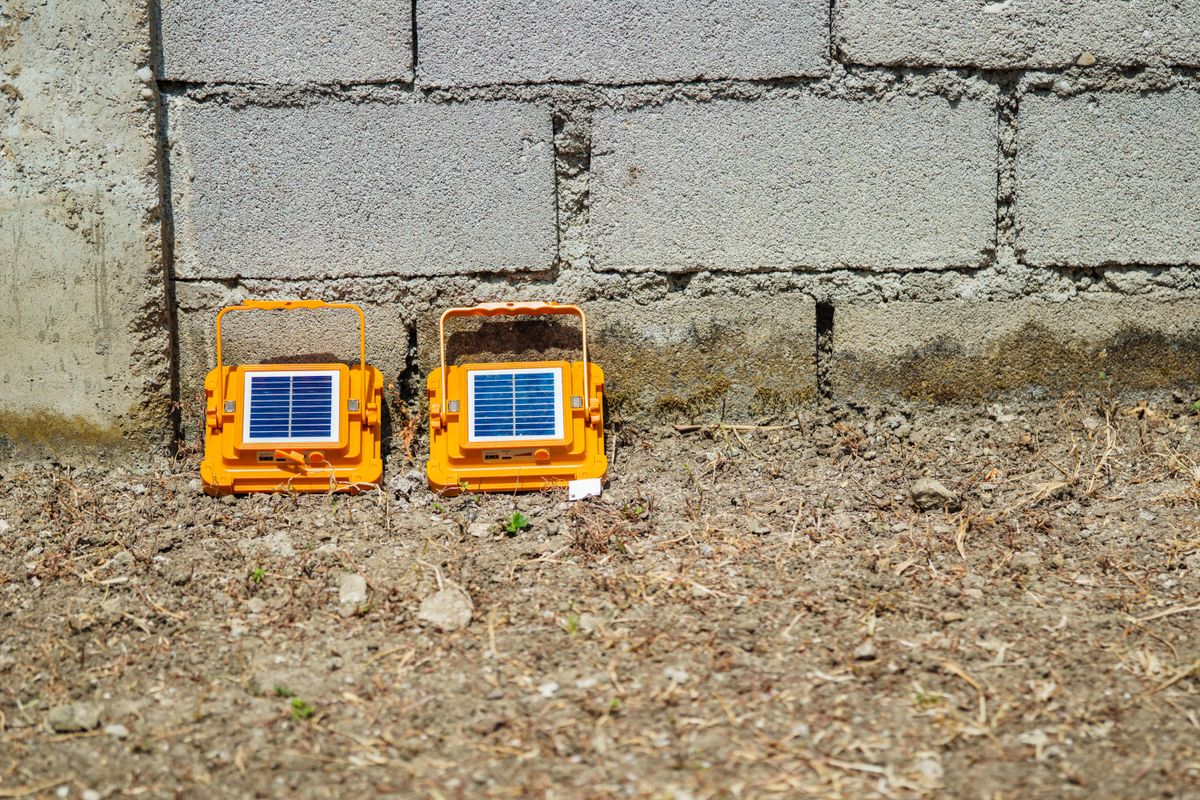
Photo by Nothing Ahead on Pexels
Most homeowners do not need to read IEC standards before buying post cap lights. But the standards world explains why some fixtures behave better.
IEC 60529 gives a framework for water and dust ingress protection. It does not promise your light will survive every storm, but it gives a more meaningful baseline than “weatherproof.”
The DOE’s solar performance guidance reminds us that panel output is affected by shading, orientation, temperature, and available solar resource. A tiny cap light panel obeys the same physics as a roof array, just at a smaller and less efficient scale.
The National Renewable Energy Laboratory also publishes solar resource and photovoltaic performance research showing how variable real-world solar input can be. Again, a fence light is not a utility array, but the variability is very real.
Consumer Reports has also warned outdoor lighting buyers to consider durability, water resistance, and realistic use conditions rather than relying only on packaging claims. I agree with that from the field. Pretty packaging hides a lot of weak battery doors.
Decision framework: which type fits your yard?
If your posts get strong afternoon sun, you can prioritize style and diffusion. Most decent solar post cap lights will work there.
If your posts get morning sun only, prioritize larger panel area, replaceable battery capacity, and lower lumen output. You want endurance, not a showy first hour.
If your posts are partly shaded all day, buy fewer lights and test first. Consider alternating solar post caps with low-voltage wired fixtures in the worst areas.
If you live where winters are dark and long, assume runtime will drop. That is not always a defect. Shorter days, lower sun angle, dirty panels, and colder battery behavior all stack against you. A model that runs 8 hours in May may run 4 to 5 hours in December.
If you are lighting stairs or a pool barrier, do not rely only on decorative solar caps for safety-critical illumination. Use code-appropriate hardwired or low-voltage lighting where required, then use solar caps for accent and wayfinding.
Maintenance that actually changes performance
The easiest performance gain is cleaning the panel. In pollen season, I have measured visible improvement after wiping panels with a damp microfiber cloth. On a dusty cap, my 36-inch reading increased from 3.7 lux to 4.4 lux after cleaning, about a 19% bump. That will not save a terrible location, but it helps.
My maintenance routine is simple:
- Wipe panels every 3 to 4 weeks during pollen or dust season
- Check that caps sit level after wood posts swell or twist
- Open the battery compartment twice a year and look for corrosion
- Replace weak rechargeable cells as a set, not one at a time
- Trim new branch growth before it shades the panel
- Do not coat the solar panel with sealant or furniture polish
FAQ
How many lumens should solar post cap lights have?
For ambience and fence marking, I usually like roughly 5 to 25 lumens per cap, depending on diffuser design and spacing. More is not always better. On a deck rail near eye level, a lower-lumen warm light can feel more pleasant than a high-output cool-white light. If you need task lighting, add a dedicated fixture instead of forcing post caps to do that job.
Why do my solar post cap lights turn off after only a few hours?
The most common causes are shade, dirty panels, aging rechargeable batteries, and winter solar conditions. Start by cleaning the panel and moving one light to a known sunny post for two days. If it improves, the location is the problem. If it does not, check or replace the battery. Also confirm that the pull tab was removed and the switch is fully on; half-seated switches are more common than people think.
Can solar post cap lights stay out in rain and snow?
Good outdoor-rated models are designed for rain, but water resistance varies. Look for an actual IP rating and inspect the battery door gasket. Snow itself is not the only issue; meltwater that refreezes around seams can stress plastic and seals. If a light is buried under snow, it will not charge well until the panel is cleared.
Should I choose warm white or cool white?
For decks, fences, and front walks, I prefer warm white around 2700K to 3000K. It looks less harsh, creates less apparent glare, and usually blends better with wood, brick, and landscaping. Cool white can look brighter at first glance, but it often feels more commercial and can make small fixtures seem glaring.
Bottom line from the field
The strongest predictor in my test was not the biggest lumen claim or even the longest total sun window. It was whether the light had useful late-day charging, a battery with enough reserve, and a housing that stayed dry and level.
If you are buying solar post cap lights for a whole fence, do not start with a full-cart guess. Buy samples, place them on your hardest posts, and judge them at midnight and early morning—not just at dusk. That one habit will save more frustration than comparing another dozen lumen numbers.