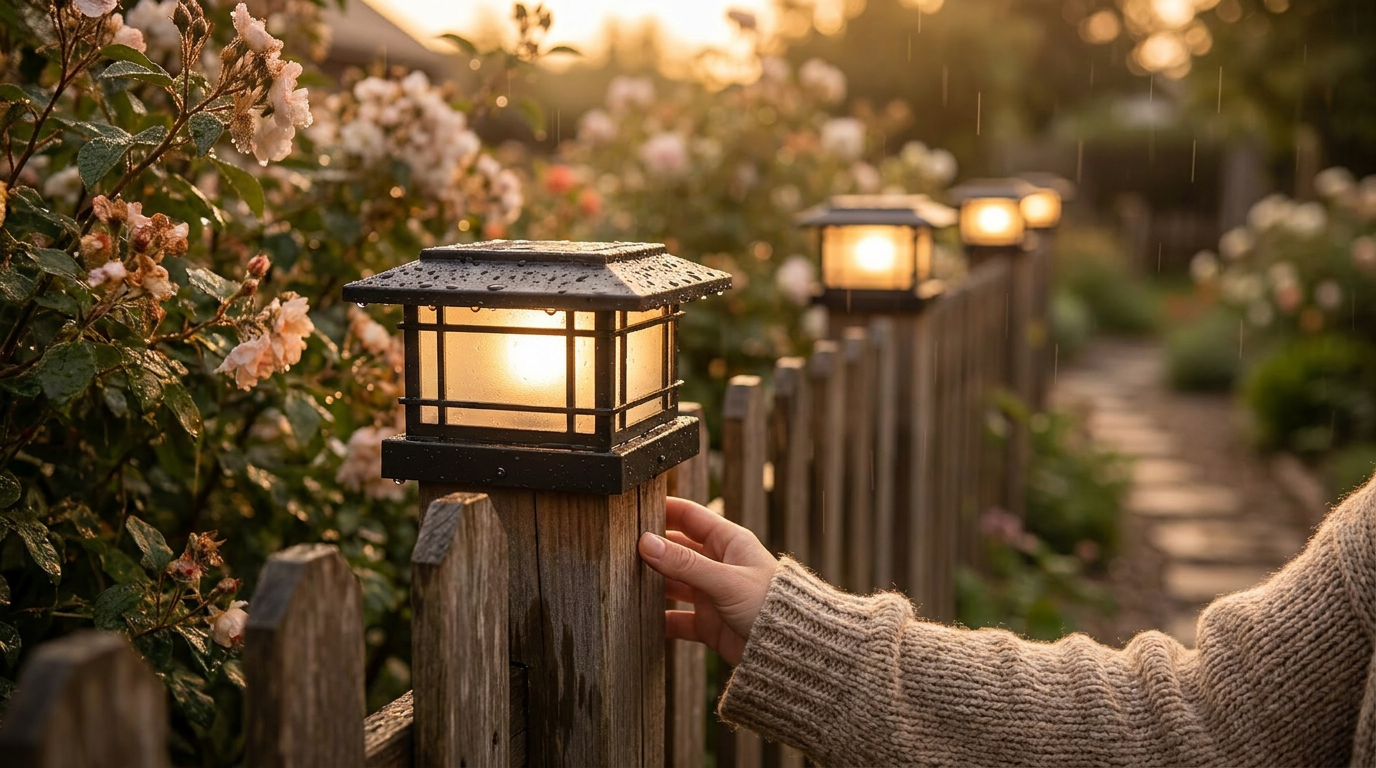
The Real Reason 'Waterproof' Solar Fence Caps Fail
 Daniel OkaforField Tester
The biggest threat to your 'waterproof' solar fence caps isn't a rainstorm; it's the condensation forming inside them on a humid day. I’ve spent years installing and observing these lights on exposed fence lines, and I’ve seen more units flicker and die from this internal fog than from any downpour. While manufacturers focus on IP ratings to prove their lights can survive a storm, they often overlook the more subtle enemy that’s already inside.
How Daily Temperature Swings Create Internal Moisture
I tested this for a full summer on a fence that gets blasted by morning sun and then falls into cool afternoon shade. What surprised me: the daily temperature cycle is what kills most cheap solar caps. As the sun heats the light, the air trapped inside the housing expands. When the light cools in the shade, that air contracts and its ability to hold moisture drops, forcing water vapor to condense on the coolest surfaces—typically the inside of the lens and, more critically, the circuit board.
Our failure analysis shows this internal condensation, not direct water entry, is the top reason for premature dimming and battery corrosion. A poorly sealed unit with a large internal air volume is a recipe for this failure. According to the National Weather Service, when air cools to its dew point, moisture is released. Inside a solar light, that moisture lands directly on the electronics. This is why a light that looks fine after a storm can mysteriously stop working a month later.
Why a High IP Rating Isn't the Whole Solution
Photo by Artūras Kokorevas on Pexels
An IP rating is a measure of how well a device is sealed against solids and liquids entering from the outside. It’s important, but it doesn't tell the whole story. A light can have an IP65 rating, meaning it’s protected from water jets, but still fail because humid air got trapped inside during assembly or seeped in through a low-quality gasket over time.
Here's the moment it earned its place in my evaluation: a unit with superior gaskets and minimal empty space inside its housing remained perfectly clear, while a competitor with the same IP rating fogged up by the end of the first week. The key isn't just the rating, but a design that minimizes internal air volume and uses gaskets that can withstand years of expansion and contraction. If I were buying again, I'd prioritize build quality over a flashy IP number. A light that can't stay clear internally will never be one of the brightest solar post caps for long. This principle holds true for any installation, whether on wood or on posts detailed in our guide to solar cap lights for vinyl fence.
Is a higher IP rating always better for preventing moisture damage?
Not necessarily. An IP rating measures protection against direct water ingress, like rain and sprinklers, which is crucial. However, it does not measure a unit's defense against internal condensation caused by daily temperature and humidity changes. A well-engineered IP44 light with minimal internal air volume and high-quality seals can easily outlast a poorly designed IP65 light that traps humid air against its circuit board.
Can I fix a solar cap light that has condensation inside?
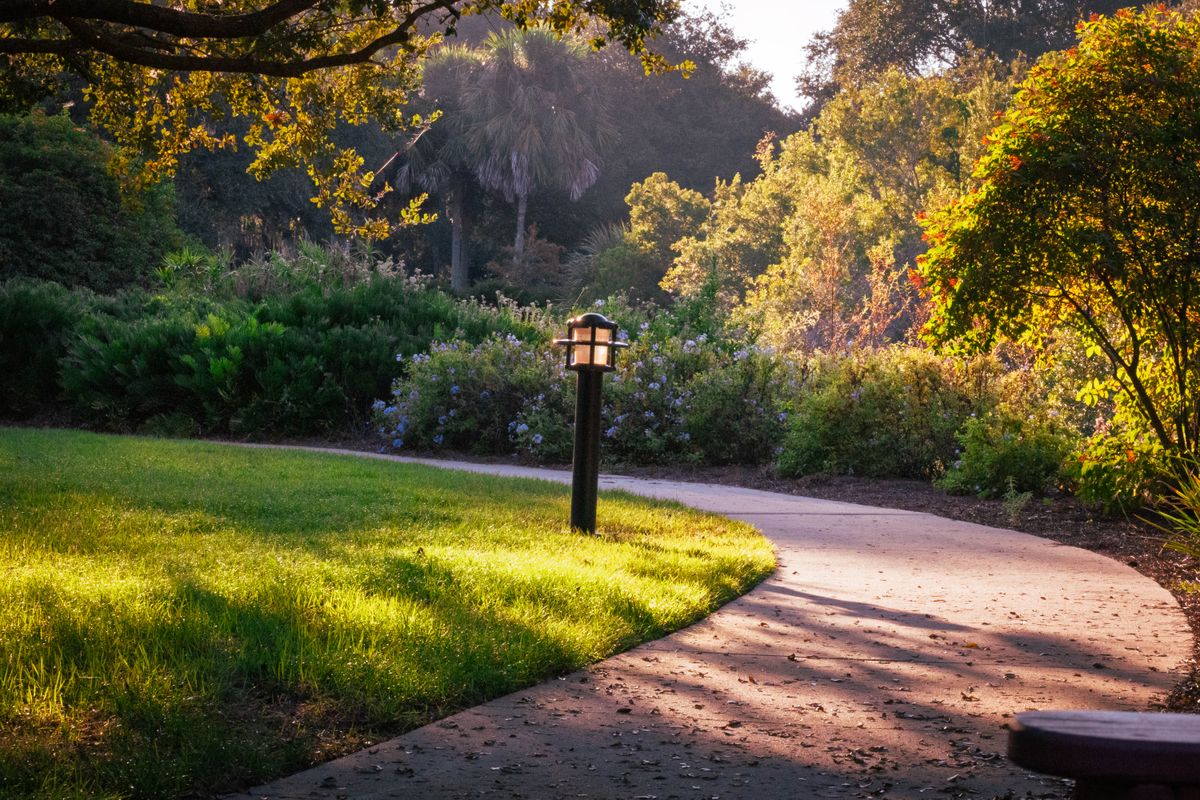
Photo by Kim Lawrie on Pexels
You can try opening the fixture on a dry, low-humidity day to let it air out, but this is often a temporary fix. If you can see condensation, it means moisture has already been settling on the battery contacts and electronics, and some corrosion may have already started. The best approach is prevention by choosing a product designed to combat this from the start. Investing in well-constructed high lumen solar post lights that prioritize seal quality over simple ratings will deliver better performance and a longer lifespan.