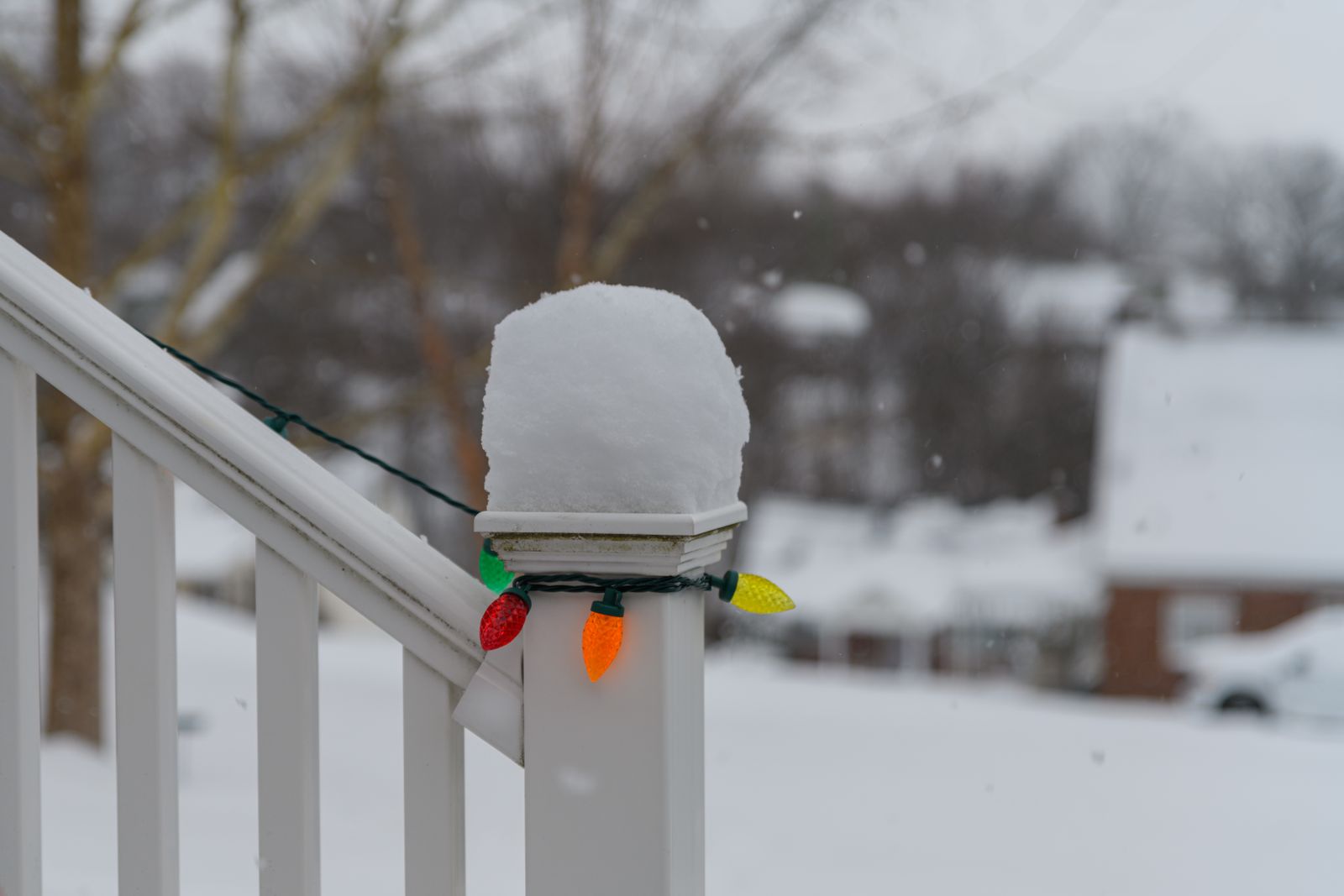
How to Maximize Solar Deck Light Battery Charge During Winter Months
Solar post lights get less charge in winter for three reasons that stack: days are shorter, the sun sits lower so light hits a horizontal panel at a shallow angle, and snow or frost can cover the panel entirely. The practical response is to protect the charging window you still have, by keeping panels clear, removing winter-specific shade, and relocating any cap whose post top loses direct sun once the sun angle drops. A cap that fully charges in 6-8 hours of direct sun in July may only get a fraction of that in January, and managing the difference is mostly maintenance rather than equipment.
What actually changes in winter
Day length is the obvious factor and the smallest part of the story. The larger factor is solar altitude. In summer the sun passes high overhead and its light strikes a flat panel close to straight on. In winter the same sun crosses much lower, so the same beam spreads across a wider area of panel and delivers less energy per square inch.
The third factor is geometry on your own property. A fence, hedge, garage, or neighboring house that cast no shadow across a post top in June can shade it for most of a winter day, because low sun throws long shadows. This catches people out because nothing on the property changed. Only the sun's path did.
Cold itself has a smaller effect than most owners assume. Low temperatures temporarily reduce the capacity a Ni-MH cell can deliver, so a cold night gives slightly less runtime from the same stored charge, but the cell recovers as temperatures rise. Reduced charging input, not cold, is what shortens winter evenings.
Winter charging checklist
Photo by Kindel Media on Pexels
Sun exposure changes by season
| Factor | Summer condition | Winter condition | What to do about it | |---|---|---|---| | Daylight hours | Long, easily covering a full charge window | Short, often less than the charge window | Prioritize the sunniest posts | | Sun angle | High, striking the panel near straight on | Low, spreading light across the panel | Keep panels flat and level | | Shadows from structures | Short, rarely reach post tops | Long, can cover post tops all day | Re-survey at midday and relocate caps | | Tree cover | Dense canopy on deciduous trees | Bare branches, minimal shading | Deciduous shade stops being the problem | | Evergreen cover | Shades post tops | Still shades post tops | Prune or move the cap | | Panel surface | Dust and pollen | Snow, frost, ice, road salt film | Brush clear and wipe after thaws | | Cell behavior | Full available capacity | Slightly reduced in cold | Expect shorter evenings; no fix needed |
Positioning matters more in winter than in summer
In summer nearly any open post charges adequately. In winter the difference between a good post and a marginal one decides whether a cap lights for hours or minutes, so it is worth treating position as an adjustable setting.
South-facing exposure helps because the low winter sun tracks across the southern sky. A post top on the south side of a yard, with open sky above and no tall structure to its south, keeps direct sun longest. Post tops tucked against the north side of a house, garage, or tall fence may be in shadow from morning to evening.
Height helps too. A deck rail post above a fence line often clears a shadow that reaches lower posts. If part of your run must go dark for the season, choose the low, shaded stretch and keep the high, open positions lit.
Level matters as well. A cap on a cupped or sloped post top faces its panel slightly away from vertical, which is tolerable in summer and costly in winter. Re-cutting a weathered post top flat, or shimming the base, restores the panel to horizontal. These placement trade-offs are the winter version of the survey described in our guide to optimizing post cap lights for perimeter reliability.
Snow, frost, and the weather rating
These caps carry an IP44 rating, which covers outdoor use in rain, snow, frost, and sleet. Winter weather is not a threat to the housing. It is a threat to the charging window, which is a completely different problem and the reason snow removal is the highest-value winter task.
An inch of snow on a panel means no charge that day, and frost still scatters light before it reaches the cell, so a quick pass with a gloved hand or a soft brush is usually all that is needed.
Two winter conditions deserve extra attention. The first is meltwater. Snow that melts on a cap and refreezes in the gap between cap and base can work a loose cap looser, so check seating after a thaw. The second is road salt spray near driveways and sidewalks, which leaves a film that dulls the panel and should be wiped off with a damp cloth. Our piece on why waterproof solar fence caps fail explains where a weather rating stops protecting a cap that is not seated correctly.
Battery care through the cold months
Photo by Nothing Ahead on Pexels
The 1000mAh Ni-MH AA cell in each cap does not need special winter treatment, but a few habits reduce wear during the season when it works hardest.
Avoid leaving a cap in a permanently shaded position all winter. A cell that is repeatedly drained flat with almost no daily recharge ages faster than one that finishes each night with charge left. Moving that cap to a sunlit post is battery care as much as it is a lighting decision.
If you choose to store caps indoors for the winter instead, charge them fully in direct sun first, keep them somewhere cool and dry rather than a hot utility room, and give them a full sun charge again before reinstalling in spring. Ni-MH self-discharges slowly in storage, so a cap that comes out of a box in March will need a good day of sun before it performs.
Temperature and moisture cycling is a genuine long-term wear factor, which our article on how long post cap lights last in high humidity examines in more detail.
Setting the right winter expectation
Winter runtime will be shorter than summer runtime. That is arithmetic, not a fault. If a run of caps that lit until well after midnight in July now switches off mid-evening in January, the system is doing exactly what a solar system does with less input.
The output itself does not change. Each cap still produces 15 lumens from 8 warm white SMD LEDs with a 360 degree viewing angle when it has charge. What changes is how long that charge lasts. For most owners this matters less than it sounds, because winter evenings start earlier: the caps come on at 5 p.m. rather than 9 p.m., which covers the hours people are actually outside or looking out at the yard. The cases where winter performance genuinely disappoints are almost always shade cases rather than season cases.
Frequently asked questions
Do solar post lights work in winter at all? Yes, with shorter runtime. Charging still happens on clear winter days, and the caps are rated for rain, snow, frost, and sleet. The main practical requirement is keeping snow off the panels.
Should I bring the lights inside for the winter? Not for weather protection, since the housings are rated for it. Bringing them in makes sense only if a stretch of your run loses direct sun entirely for months, in which case charge them fully before storing and again before reinstalling.
How do I clean snow off without damaging the panel? Use a soft brush or a gloved hand and sweep rather than scrape. Avoid ice scrapers, stiff brushes, hot water, and any abrasive, all of which can scratch or crack the panel surface.
Why did my lights get worse in November when nothing changed? The sun angle dropped and shadows from your fence, house, or garage grew long enough to reach the post tops. Check the run at midday and you will usually find the newly shaded stretch immediately.
One thing to do before the first snow
Pick a clear day in late autumn, stand at each lit post at midday, and look straight up. Mark every post that no longer has open sun on its top surface, then move those caps to posts that do, even if it means lighting fewer positions. A shorter, well-charged run outperforms a full run of caps sitting in winter shadow.
Cover photo by Jay Brand on Pexels.