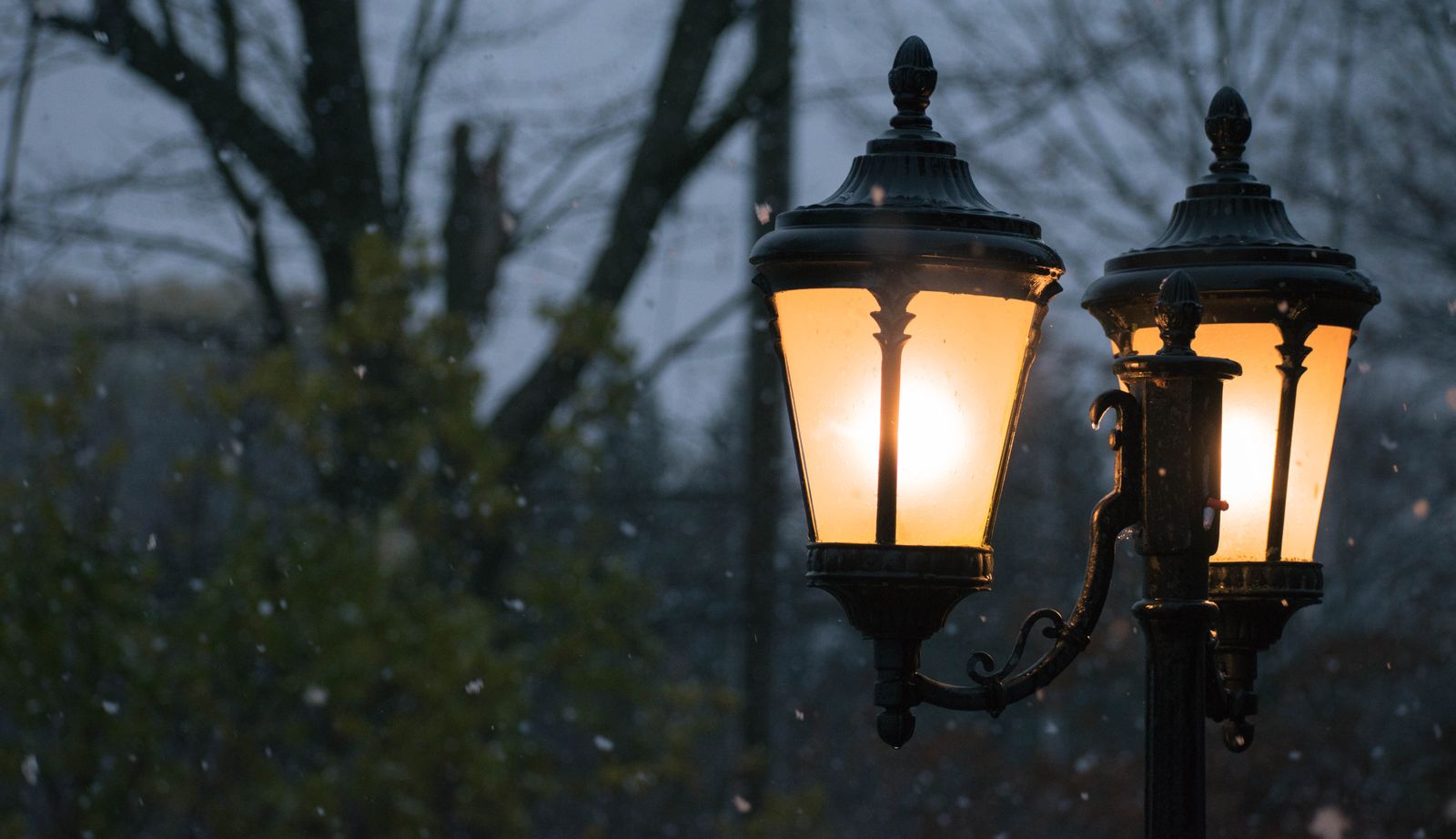
IP44 Waterproof Solar Post Lights Winter Care & Weatherproofing Guide
The 48-hour rule of thumb governs IP44 solar post cap lights in winter: fixtures safely operate in ambient temperatures down to -4°F (-20°C), provided accumulated snow is removed within 48 hours. While an IP44 rating protects against 360-degree splashing water, standing snow melt creates hydrostatic pressure that can bypass top seams if drain holes freeze shut. Keep solar collectors clear and inspect 1000mAh Ni-MH AA rechargeable batteries annually.
4 Essential Winter Rules for Solar Post Cap Care
- 15 Lumens Output Preservation: Solar panels require 6 to 8 hours of direct winter sunlight to deliver full 15-lumen brightness from the 8 warm white SMD LEDs.
- 48-Hour Snow Clearing Window: Clear snow from top solar collectors within 48 hours to prevent standing meltwater from bypassing IP44 seals.
- Battery Thermal Slowdown: Freezing temperatures temporarily drop 1000mAh Ni-MH AA battery capacity by 30% to 50%, reducing nightly runtimes from 8-10 hours down to 4-6 hours.
- Universal Base Expansion Relief: Multi-fit bases (adapting to true 3.5"x3.5", 4"x4", 4.5"x4.5", 5"x5", and 5.5"x5.5" posts) must be mounted without overtightening to allow for natural winter wood expansion.
The Master Pre-Winter & Seasonal Maintenance Checklist
Photo by Sóc Năng Động on Pexels
- Clean top solar collectors using warm water and a soft microfiber cloth to remove grime, sap, and dried minerals.
- Inspect the durable plastic housing and base adapters (compatible with 3.5", 4", 4.5", 5", and 5.5" posts) for micro-fractures.
- Clear internal condensation drain channels beneath the cap housing to prevent standing ice formation.
- Open the battery compartment and check the 1000mAh Ni-MH AA battery contacts for corrosion or moisture ingress.
- Wipe the automatic dusk-to-dawn sensor lens to ensure accurate 15-lumen light activation at sunset.
- Verify mounting screws are snug, leaving a 1/16-inch tolerance to absorb winter post expansion.
Printable Winter Care Reference Card
- Temperature Threshold: Safe from -4°F to 120°F (-20°C to 49°C). Store batteries indoors if temperatures drop below -10°F for over 7 consecutive days.
- Cleaning Solution: 1 quart warm water + 2 drops mild dish soap. Never use chemical de-icers, isopropyl alcohol, or rock salt near plastic lenses.
- Snow Removal Tool: Soft microfiber cloth or rubber silicone squeegee only. Never scratch top resin with metal tools or ice scrapers.
- Battery Care: Replace 1000mAh Ni-MH AA rechargeable batteries every 12 to 18 months to preserve 15-lumen peak brightness.
- Drain Audit: Ensure bottom drainage gaps surrounding the 3.5" to 5.5" mounting bases remain clear of leaf litter and ice dams.
Pro Insight: Thermal Expansion and Base Adapter Stress
When wood fence posts absorb moisture prior to a hard freeze, they expand in volume by up to 3% to 5%. If your solar post cap light base adapter (fitting 3.5" up to 5.5" posts) is fastened too tightly against the post top, this lateral swelling creates severe hoop stress along the plastic mounting skirt.
Expert Action: Back off mounting screws by 1/2 turn during fall prep. This subtle tolerance prevents thermal cracking across plastic housing seams while keeping the 5.8 x 5.8-inch cap secure against 50 mph winter wind gusts.
Winter Solar Light Troubleshooting Guide
| Symptom | Primary Cause | Field Diagnosis | Corrective Action |
| --- | --- | --- | --- |
| Light runs for only 1–3 hours | Cold-induced battery capacity drop or solar panel shading | Check panel position relative to low winter sun angles; test battery voltage | Clear snow daily; allow 2 full days of direct sunlight charge or replace the 1000mAh Ni-MH AA cell. |
| Fixture flickers or stays off | Oxidized battery contacts or dirty sensor lens | Inspect terminal springs inside battery compartment for white powdery buildup | Clean terminals with a dry cotton swab; wipe dusk-to-dawn optical sensor with a damp cloth. |
| Internal moisture / fogged lens | Blocked drain holes causing capillary meltwater draw | Examine bottom base skirt for trapped dirt, pine needles, or frozen ice dams | Remove cap, clear drain slots, wipe internal housing dry, and re-seat housing flush. |
| Cap loose on 4x4 or 5x5 post | Freeze/thaw wood contraction or stripped screw holes | Check base adapter fitment against actual post dimensions (e.g., true 3.5" or 5.5") | Adjust multi-base insert alignment and reset screws into fresh wood fiber using exterior anchors. |
Diagnose common winter performance issues affecting 15-lumen output and dusk-to-dawn automatic operation.
4-Season Solar Post Cap Maintenance Matrix
| Quarter | Focus Area | Core Tasks | Service Interval |
| --- | --- | --- | --- |
| Q1: Winter (Jan–Mar) | Snow & Ice Deflection | Clear top panel snow within 48 hrs; monitor 1000mAh battery runtime; clear ice dams from base adapters. | Bi-Weekly |
| Q2: Spring (Apr–Jun) | Pollen & Seal Audit | Wash away yellow pollen buildup with microfiber cloth; inspect IP44 housing seals; test dusk-to-dawn sensor. | Monthly |
| Q3: Summer (Jul–Sep) | Heat & UV Protection | Wipe solar collector resin; verify 8 SMD LEDs deliver full 15 lumens; check for insect nests in base skirt. | Monthly |
| Q4: Fall (Oct–Dec) | Freeze Preparation | Perform full pre-winter checklist; loosen base screws by 1/2 turn; refresh aging Ni-MH AA batteries. | Bi-Weekly |
Follow this quarterly schedule to maximize the lifespan of your solar post caps across all weather conditions.
Mid-Season Upgrade & Preservation Action Plan
Your decision: Determine if your post cap lights require battery replacements or full weatherproofing upgrades before freezing temperatures arrive.
Do this next: Execute the 6-point pre-winter checklist: wipe solar collectors, verify base fits on 3.5" to 5.5" posts, test 1000mAh Ni-MH batteries, and clear bottom drain paths.
Related resource: Download the Printable Winter Care Reference Card for quick access during shed or workshop maintenance.
Upgrade dim or non-weatherproof post caps with the 6-Pack Waterproof IP44 Solar Post Cap Lights, offering 15 lumens of warm white light and multi-fit base compatibility.
Take these concrete steps right now to protect your perimeter lighting setup.
12-Month Battery & Panel Maintenance Cadence
- Every 30 Days — Wipe top solar collector panel with a damp microfiber cloth to remove dust, bird droppings, and environmental film.
- Every 90 Days — Inspect the dusk-to-dawn sensor optic and verify that all 8 warm white SMD LEDs illuminate uniformly at 15 lumens.
- Every 180 Days — Open battery housing, inspect 1000mAh Ni-MH AA cells for swelling or corrosion, and re-tighten base adapter fittings.
- Every 12 to 18 Months — Replace internal 1000mAh Ni-MH AA rechargeable batteries with fresh outdoor-rated solar rechargeable cells.
Recommended All-Weather Solar Post Cap Replacements
For reliable year-round perimeter security and aesthetic lighting, select post caps specifically engineered for harsh outdoor environments.
IP44 vs. IP65 vs. IP67: Winter Performance Comparison
| Ingress Protection Rating | Solid Particle Protection | Liquid Protection Level | Snow Melt Pressure Tolerance | Ideal Outdoor Application |
| --- | --- | --- | --- | --- |
| IP44 (Post Cap Standard) | Protected against solids > 1.0mm (wires, large bugs) | Protected against water splashing from any direction | Safe for falling snow; requires clearing within 48 hrs to avoid melt pressure | Fence posts, deck railings, porch caps, perimeter security |
| IP65 (Heavy Dust/Jet) | Dust-tight (complete protection against contact) | Protected against water jets from any angle | Withstands heavy packed snow accumulation and ice damming | Exposed wall packs, commercial landscape floodlights |
| IP67 (Submersible) | Dust-tight (complete protection against contact) | Protected against temporary immersion up to 1 meter | Handles complete ice burial and standing water submersion | In-ground pathway well lights, pond edge illumination |
Understand how different Ingress Protection (IP) ratings respond to freezing rain, standing snow melt, and sub-zero winter weather.
Winter Management Strategy: Leave Mounted vs. Indoor Storage
Photo by Zafer Erdoğan on Pexels
IP44 solar post cap lights are engineered to remain outdoors across USDA Hardiness Zones 4 through 10. Indoor battery storage is only recommended when sustained local temperatures plunge below -10°F (-23°C) for more than two consecutive weeks.
Best choice for
- Leave Mounted Year-Round — 6 to 8 hours of winter sunlight recharges the 1000mAh Ni-MH battery sufficiently for 4 to 6 hours of nightly 15-lumen illumination.
- Indoor Battery Preservation — Removes chemical freeze stress from Ni-MH cells while leaving durable 5.8x5.8-inch plastic housing caps mounted to protect post tops.
- Do not leave heavy wet snow piled higher than 4 inches over solar caps for longer than 48 hours.
- Do not apply rock salt or liquid chemical de-icers to deck boards within 3 feet of plastic post cap bases.
- Winter Recharge Cycling — If prolonged cloud cover drops runtime below 1 hour, remove the 1000mAh Ni-MH AA battery and top off in a standard indoor AA charger.
Technical Spec Matrix: IP44 Housing & Ni-MH Thermal Limits
| Component / Module | Standard Specification | Winter Operating Limits | Performance Impact in Cold |
| --- | --- | --- | --- |
| Illumination Source | 8 Warm White SMD LEDs | -20°F to 140°F (-29°C to 60°C) | LED efficiency increases slightly in cold weather; light remains crisp at 15 lumens. |
| Energy Storage | 1000mAh Ni-MH AA Rechargeable | -4°F to 113°F (-20°C to 45°C) | Chemical reaction slows below 32°F; runtime temporarily drops from 8-10 hrs down to 4-6 hrs. |
| Housing Dimensions | 5.8 x 5.8 x 3.54 Inches | Polymeric Thermal expansion -40°F | Plastic contracts slightly in deep freeze; maintain screw clearance to avoid stress cracking. |
| Base Adapter Fitment | Multi-fit: 3.5", 4", 4.5", 5", 5.5" | Compatible with Wood / Vinyl / Plastic | Provides protective umbrella over post tops, preventing end-grain water absorption and rot. |
| Ingress Protection | IP44 Weatherproof Certification | 360° Water Splash Deflection | Deflects rain, sleet, and falling snow; requires manual clearing of standing snowpack. |
Detailed engineering parameters for the 6-pack solar post light components under extreme weather conditions.
5 Destructive Winter Maintenance Mistakes to Avoid
Prevent costly plastic housing cracks and battery failures by avoiding these common winter maintenance missteps.
First-Frost Winterization Timeline (30-Day Countdown)
- 30 Days Before First Frost — Conduct visual audit of all post lights; wipe top solar collector panels with warm soapy water to maximize pre-winter charging efficiency.
- 20 Days Before First Frost — Inspect 1000mAh Ni-MH AA battery compartments. Clean minor corrosion with a dry swab; replace batteries older than 18 months.
- 10 Days Before First Frost — Check multi-fit base adapter screws on 3.5" to 5.5" posts; loosen each mounting screw by 1/2 turn to allow for wood expansion.
- Day of First Frost — Verify dusk-to-dawn automatic turn-on at sunset; confirm 8 SMD LEDs deliver crisp 15-lumen illumination across deck perimeter.
Frequently Asked Questions: IP44 Winter Care
Can IP44 solar post cap lights stay outside during sub-zero winter temperatures?
Yes. IP44-rated solar post cap lights operate safely in ambient outdoor temperatures down to -4°F (-20°C). However, accumulated snow must be brushed off within 48 hours to prevent standing meltwater from exerting hydrostatic pressure on top panel seams.
How does freezing weather impact the included 1000mAh Ni-MH AA rechargeable battery?
Sub-zero cold temporarily slows the electrochemical reactions inside Nickel-Metal Hydride (Ni-MH) cells. This reduces total discharge efficiency, shortening nightly illumination runtimes from 8-10 hours down to 4-6 hours until warmer spring temperatures return.
What is the safest way to clear ice and snow off solar panels without damaging them?
Use a soft microfiber cloth, warm (not hot) water, or a flexible rubber silicone squeegee. Never use metal ice scrapers, abrasive pads, boiling water, or salt/chemical de-icers, as these permanently scratch solar resin and degrade plastic housing.
What happens if water freezes inside the post cap base adapter?
Water expands by approximately 9% upon freezing. If bottom condensation drain channels are clogged by debris, expanding ice can split plastic housing seams or lift the cap off its 3.5" to 5.5" wood post. Keep base drainage gaps clear.
Answers to critical questions regarding sub-zero performance, battery chemistry, and proper snow clearing.
Final Action Checklist & Seasonal Resource Summary
Your decision: Determine whether your existing post caps meet IP44 waterproofing standards and possess the 15-lumen output required for safe winter navigation.
Do this next: Complete your pre-winter inspection today: clean solar collectors, verify base screw clearance on 3.5" to 5.5" posts, clear drain paths, and test dusk-to-dawn sensors.
Related resource: Download our Printable Winter Care Reference Card for your workshop or shed.
Protect your deck investment with the 6-Pack Waterproof IP44 Solar Post Cap Lights, engineered with 8 warm white SMD LEDs, 15 lumens brightness, multi-fit bases, and included 1000mAh Ni-MH batteries.
Ensure your outdoor living space stays secure, stylish, and brilliantly illuminated all winter long.