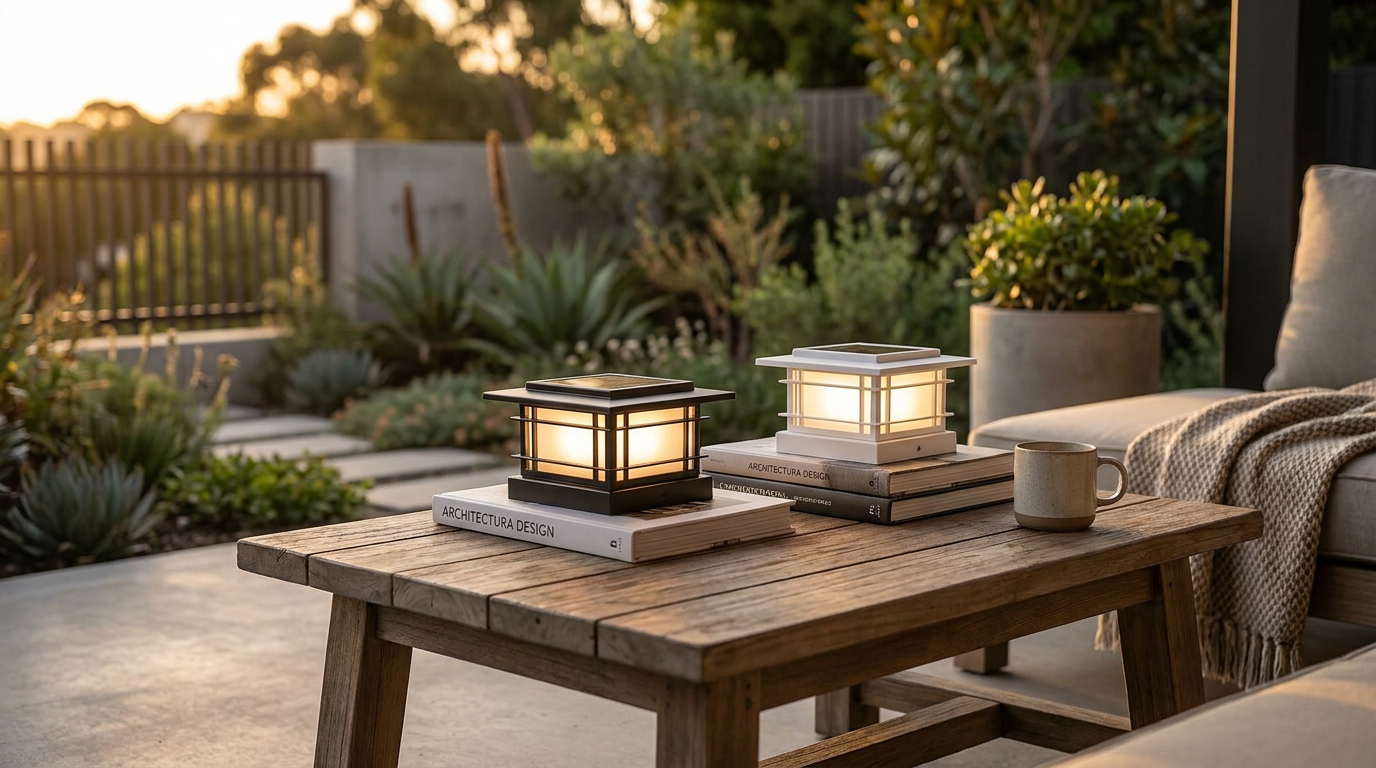
Modern Solar Post Cap Design for High-End Exteriors
 Maya ChenContributing Editor
June 8, 2026. This analysis evaluates the shift toward minimalist architectural integration in outdoor lighting. It is written for homeowners and contractors seeking to reconcile high-end design requirements with the technical limitations of photovoltaic hardware.
The Failure of Traditional Ornamental Lighting
The conventional wisdom says that a solar post cap should look like a miniature Victorian lantern or a heavy, tiered pagoda. This aesthetic consensus has dominated the market for decades, resulting in bulky profiles that clash with the clean lines of contemporary residential architecture. The problem is that these ornate designs prioritize a specific, often dated, visual language over the actual quality of light and the structural integrity of the post. According to DecksGo, the Imperial Solar 2.5 model represents a necessary pivot toward a white sloped top and a more streamlined silhouette, moving away from the cluttered geometry of the past. These older designs often suffer from excessive light spill and poor material choices that yellow under UV exposure. When a post cap is too large, it creates a visual 'mushroom' effect that disrupts the verticality of a 4x4 or 6x6 post. Furthermore, the reliance on cheap plastic lenses in traditional models leads to a significant drop in lumen output within the first twelve months of operation. The industry has long ignored the fact that a light fixture should disappear into the architecture during the day, rather than acting as a focal point of plastic ornamentation.
Technical Implementation of Modern Solar Post Cap Design
Photo by tal molcho on Pexels
Here’s the part nobody talks about: the shift to modern solar post cap design isn't just about looks; it is a fundamental change in how we manage light temperature and battery efficiency. Current high-performance models, such as the Classy Caps Solar Post Cap for 4x4 posts, are now engineered to provide up to 12 hours of light automatically, as documented by EarthTech Products. This is achieved through better integration of the solar panel into the cap’s flat surface, rather than angling it awkwardly. Modern units often feature selectable color temperatures, allowing users to move away from the harsh, bluish light of early LEDs toward a warm white solar post cap that mimics incandescent bulbs. This is critical when coordinating with other low profile solar post caps that might be used on stairs or lower deck rails. Run the math: a standard 4x4 solar post cap with an 18,000-impression search volume indicates a massive demand for hardware that fits precisely. A modern design ensures that the fixture's footprint does not exceed the post's actual dimensions by more than a fraction of an inch. This precision is particularly important for 6x6 solar post caps used on large-scale vinyl or cedar installations where a bulky cap would look disproportionate. By utilizing powder-coated aluminum or high-grade ASA resins, modern manufacturers are finally matching the longevity of the fence itself. This shift toward low profile solar post caps ensures that the lighting serves the space rather than overwhelming it. When considering modern solar post cap design, the focus remains on the seamless transition from the post to the light source, a hallmark of the low profile solar post caps category that favors utility over flair. Even within the modern solar post cap design niche, the emphasis is increasingly on how the light is cast downward to illuminate the path, rather than outward into the neighbor's yard.
A Decision Framework for Architectural Integration
Selecting a fixture requires a departure from the 'brightest is best' mentality. In a modern context, light is a tool for defining boundaries, not a floodlight for security. When evaluating options, the following criteria determine whether a post cap is an architectural asset or a liability:
- Profile Height: Does the cap rise more than two inches above the post? If so, it likely fails the modern aesthetic test.
- Material Finish: Does the black or white finish match the sheen of the fence or deck railing exactly?
- Color Temperature: Does the unit offer a warm white (2700K-3000K) option to avoid the 'parking lot' blue tint?
- Attachment Method: Does it slide over the post with a secure friction fit or require visible, unsightly screws?
- Panel Integration: Is the solar cell hidden within the top surface or is it a separate, visible component?
Shop Solar Post Cap Lights here
Sources
Photo by Alexas Fotos on Pexels
- Solar Post Caps
- Classy Caps Solar Post Cap for 4x4 Post - EarthTech Products
- Top 5 Best Solar Post Cap Lights in 2026 - Reviewed - YouTube