
The Hidden Trade-Off of Warm White Solar Post Lights
 Maya ChenContributing Editor
The conventional wisdom says warm white solar post lights, typically those with a color temperature of 2700K to 3000K, provide a superior, high-end aesthetic. This perspective prioritizes a subjective feeling of warmth over the measurable performance of the hardware. For a solar-powered device reliant on a finite battery charge, this is a significant compromise. The choice is not simply about a yellow tint versus a blue one; it is an engineering trade-off between ambiance and efficiency.
Here's the part nobody talks about: LED efficacy. Efficacy, measured in lumens per watt (lm/W), is the amount of visible light produced for each unit of electrical power consumed. According to the U.S. Department of Energy, LED technology is most efficient in the neutral to cool-white spectrum (4000K–5000K). The phosphors used to create the "warm" glow of a 3000K LED are inherently less efficient, meaning they convert less energy into light and more into heat. For a solar light charging from a small panel, wasting energy to achieve a specific color is a questionable design choice.
Run the math: if a given LED chip and driver can produce 15 lumens at 4000K, the 3000K version of that same chip might only produce 12 lumens using the identical amount of power from the battery. That 20% drop in brightness is the direct cost of choosing ambiance over output. While 12 lumens may be sufficient for marking a post, it provides substantially less functional light for illuminating pathways or detecting obstacles. This efficiency loss is especially critical for fixtures like low profile solar deck caps, where proximity to the ground demands maximum brightness for safe navigation.
This trade-off extends across different styles. Homeowners seeking a classic look for their vinyl fence often select white solar post caps with warm white LEDs to mimic the glow of old incandescent bulbs. This prioritizes nostalgia over the superior visibility that a neutral white light would provide for perimeter security. The issue is compounded with dark-colored fixtures. The housing of black solar post cap lights can absorb more ambient light, making a high initial lumen output essential for achieving adequate ground illumination. Sacrificing lumens for a warmer tone in this context is counterproductive.
I'll change my mind when manufacturers can mass-produce a 3000K solar light that matches the lumen-per-watt efficacy and 10-hour runtime of its 4000K equivalent without requiring a larger battery and panel. Until that data is available, the market-wide preference for warm white is an aesthetic choice that comes at a measurable cost to performance and security.
Does warm white light attract fewer bugs?
This is a common misconception. Insects are primarily attracted to ultraviolet (UV) light, which modern LEDs of any color temperature produce in negligible amounts. The secondary attractant is brightness (lumens) and heat. Since warm white LEDs can be less energy-efficient, they may produce slightly more heat for the same wattage, but the primary factor remains the light's intensity, not its color. A dim light of any color will attract fewer insects than a bright one.Is 3000K bright enough for solar post lights?
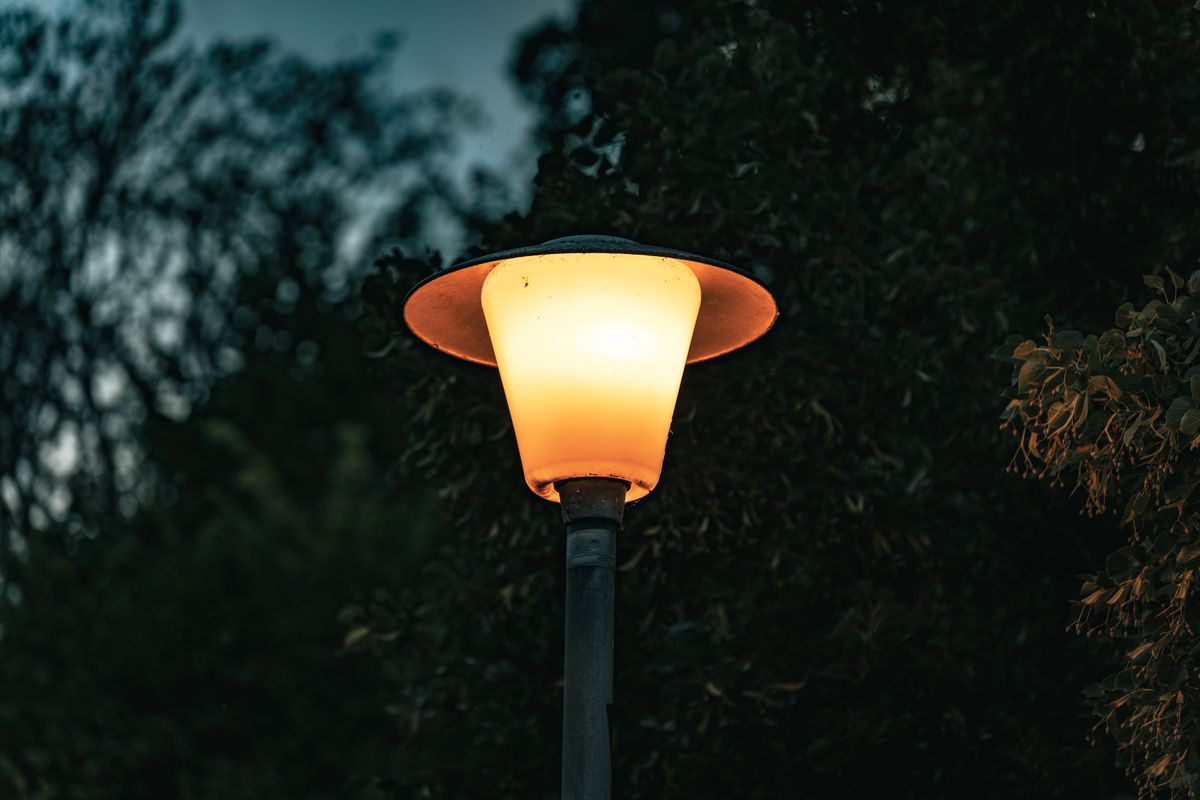
Photo by Baran Robin on Pexels
Whether a 3000K light is "bright enough" depends entirely on its specified lumen output, not its color temperature. A 3000K light rated at 50 lumens will be significantly more effective for security and navigation than a 3000K light rated at 5 lumens. Many products marketed as "warm white" are low-lumen decorative units. Buyers must verify the lumen specification to ensure the light meets their functional needs for brightness, rather than assuming the color temperature is an indicator of performance.