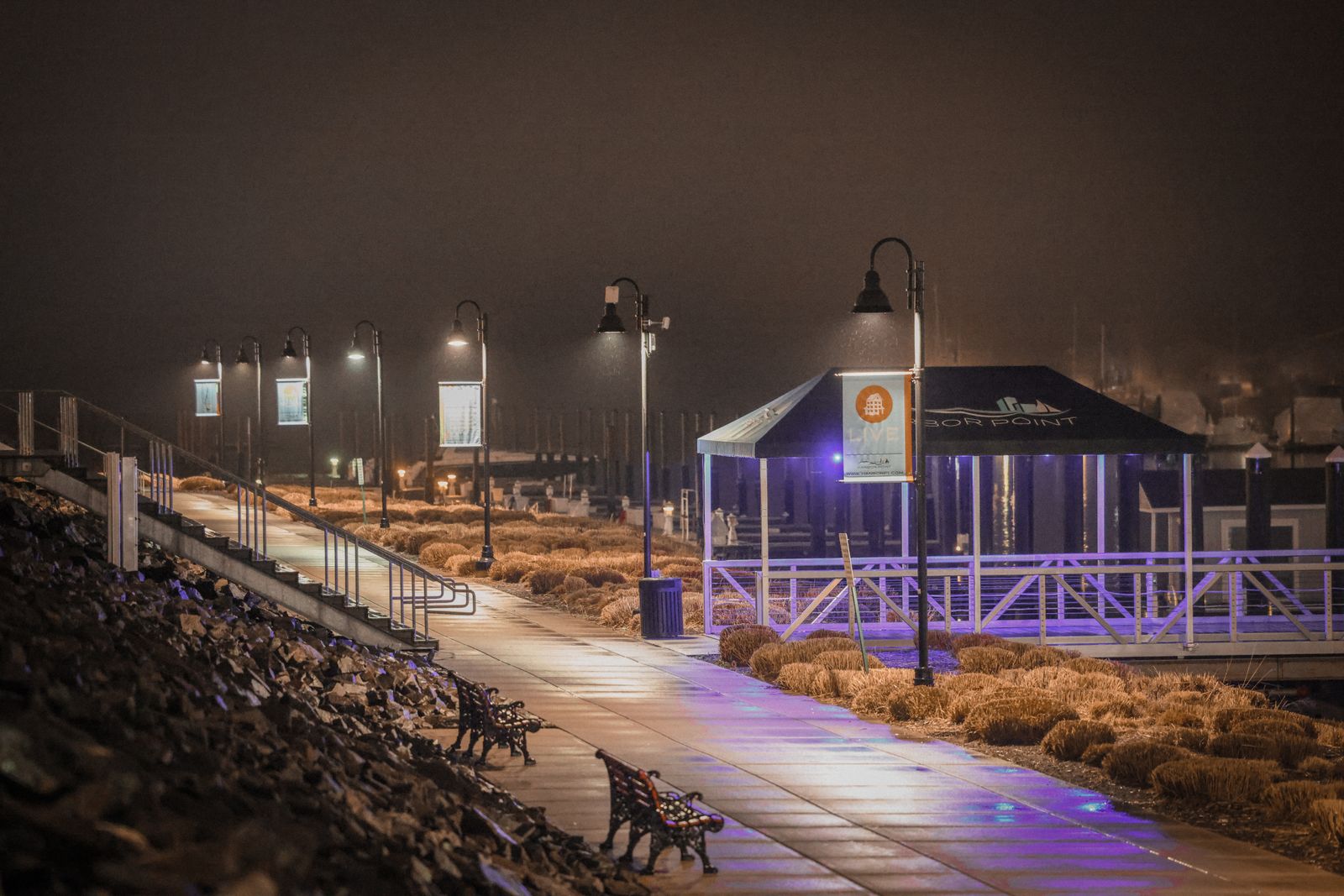
Solar Post Cap Lights on Dock and Jetty Posts: A Waterfront Guide
Dock and jetty posts are the best-charging and hardest-serving locations on a waterfront property: full open sky above them, and constant spray, wind, and reflected sun below. Post-top solar lights suit them well because no wiring has to be run out over water, but the mounting has to account for movement, for pilings that are rarely a standard size, and for the fact that anything not fastened down will end up in the lake.
Why docks are unusually good places for solar lights
Charging is the first thing a solar light needs, and a dock delivers more of it than almost any spot on a property. There is no tree canopy over open water, no house shadow in the afternoon, and water reflects additional light upward. A panel on a piling top typically sees more usable sun over a day than the same panel on a fence beside a garage.
That matters because runtime follows charge. Solar Post Cap Lights charge on 6-8 hours of full and direct sunlight into an included 1000mAh NI-MH AA rechargeable battery, with an automatic on/off sensor that brings them on at dusk. A dock post is close to the ideal case for meeting that charging requirement in practice rather than in theory.
What lighting a dock is actually for
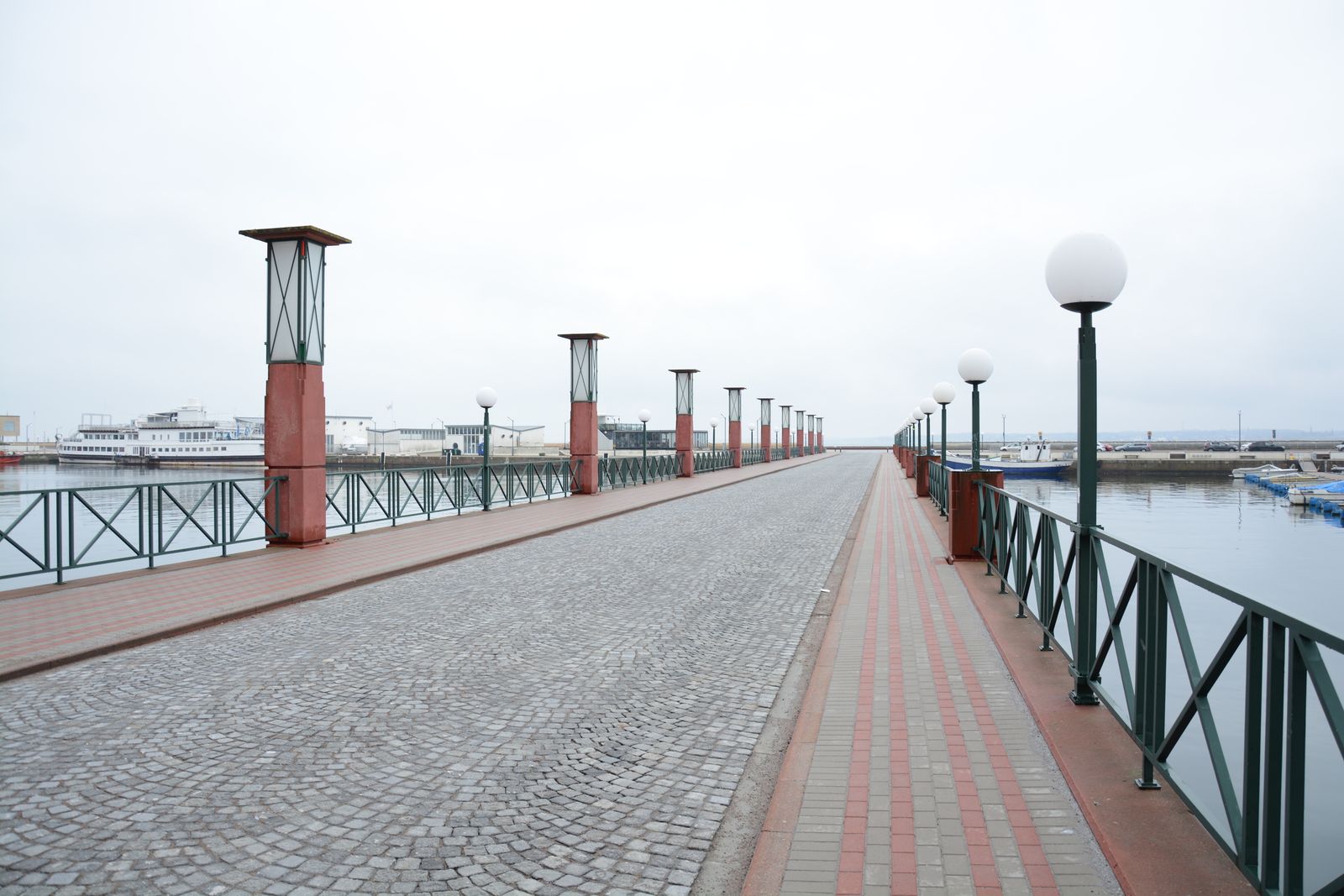
Photo by Jakob Andersson on Pexels
Be clear about the job before choosing a fixture, because docks have three separate lighting needs and only one of them is decorative.
- Edge definition. Marking where the deck surface ends and the water begins is the safety function, and it is the one that matters most for anyone walking out at night.
- Approach and gangway. The transition from land to dock, and any ramp or step, is where people misjudge footing.
- Cleats, ladders, and tie-up points. Hardware you step over or reach for in the dark.
- Navigation marking. Making the structure visible to an approaching boat.
Piling tops, dock posts, and the measurement problem
Waterfront structures use a wider range of post sizes than fences do, and a lot of them are not standard at all. A rough sawn piling, a treated 6x6 corner post, and a light vinyl-sleeved rail post can all appear on the same dock.
Solar Post Cap Lights are supplied with different sizes of bases, listed as compatible with any standard true size of 3.5" x 3.5", 4" x 4", 4.5" x 4.5", 5" x 5", and 5.5" x 5.5" wood, vinyl, or plastic post cap. The lights themselves measure 5.8 x 5.8 x 3.54 inches. That combination fits standard dock rail and dimensional posts directly. Round pilings and oversized timbers do not have a square top to seat against, and the normal workaround is to fasten a small flat plate or offcut of treated lumber to the piling top first, giving you a square, level bearing surface at a size a base will fit.
| Waterfront post type | Typical fit | Note | |---|---|---| | Dock rail post, dimensional | Direct fit within the listed size range | Measure the true top, not the nominal size | | Treated 4x4 or 5x5 dock post | Direct fit | Trim a cupped or split top flat first | | Vinyl-sleeved rail post | Fits, but hollow | Fasten into the wood inside the sleeve | | Round piling | No square bearing surface | Add a flat treated plate to the top first | | Oversized timber piling | Larger than the listed sizes | Add a plate sized to the base |
Fastening for wind, wake, and things that move
A dock moves. Floating docks rise and fall and rock under a wake; fixed docks vibrate when people walk them. Wind exposure over open water is higher than in a fenced yard because there is nothing to break it. Anything you install on a dock post needs to be fastened as if it will be shaken, because it will be.
Losing a light overboard is the failure mode unique to this location, and it is almost always a fastening decision rather than a product one.
Spray, humidity, and honest expectations

Photo by Alexandra Kollstrem on Pexels
These are plastic solar post lights with a waterproof rating of IP44, which the manufacturer states is suitable for outdoor use in rain, snow, frost, or sleet. On a dock that covers rain and the spray thrown by wake and wind. It does not cover submersion, so a post top above the deck surface is the right place and anywhere that goes under water at high water is not.
Two waterfront realities are worth planning around regardless of the fixture. Salt water is materially harder on hardware and plastics than fresh water, so a coastal dock will always show wear sooner than a lake dock. And constant high humidity is a different stress from occasional rain, since the air itself stays damp for months. Our article on how long these lights last in high humidity goes into what to expect there, and the real reason "waterproof" fence caps fail is worth reading before you assume a rating is a guarantee.
The practical routine is short: rinse the tops with fresh water when you hose the dock, especially on salt water, and check the fasteners at the start and end of each season.
Winter haul-out and seasonal docks
Many docks come out of the water or get stripped down before ice forms. Treat the lights as removable hardware and take them off with everything else. Two reasons: ice movement destroys anything left on a piling at water level, and a light stored dry is a light that starts next season working.
Label the bases as you remove them, or keep each light with a note of which post it came from. On a dock with mixed post sizes, matching bases back to posts in spring is otherwise a guessing game.
FAQ
Can these be used as navigation lights on a private dock? No. They are decorative and wayfinding lights, not marine navigation equipment, and they are not intended to meet any navigation marking standard. If your structure must be visible to boat traffic, ask your local waterway authority what is required.
Will the reflected light off the water be a nuisance? At 15 lumens per light the reflection is faint, and post-top mounting keeps the direct path from lamp to eye above the water surface. A wide interval between lit posts keeps it softer still.
Do dock lights need more brightness than fence lights? Not for edge marking, which is what matters at night. What docks need is consistency — an unbroken line of markers so the eye can read where the structure ends. Gaps are more dangerous than dimness. Our notes on perimeter reliability apply directly.
Is a floating dock harder than a fixed one? Slightly, because it moves more and the motion works fasteners loose faster. The mounting method is the same; the difference is that you should plan on retightening at the start of each season.
The practical next step
Walk your dock at dusk and mark with tape the posts where you actually want a point of light — normally the gangway, both outer corners, and the ladder. Then measure the true top of each marked post, since that is what determines whether you need a base from the pack or a flat plate on top of a piling first.
Cover photo by David Kanigan on Pexels.