
Solar Post Caps on Balcony and Roof-Terrace Railings: What Works
A balcony or roof terrace is the best charging site on most properties and the worst mounting site. Open sky above means a panel gets full unobstructed sun for hours, but railing posts up there are usually metal tube, glass channel or a narrow steel upright with no flat square top for a cap to sit on. Whether this works comes down to what your railing is made of and how exposed the position is.
The charging side is genuinely excellent
Start with the good news, because it is a real advantage. These caps need six to eight hours of full and direct sunlight for a complete charge, and a roof terrace or a south-facing balcony often delivers more usable sun than any ground-level fence. There are no trees, no house shadow for most of the day and no neighbor fence blocking the low winter sun.
That matters because a fully charged cap behaves completely differently from a partly charged one. Ground-level fence caps commonly underperform because of shade rather than hardware. Up on a terrace, that constraint mostly disappears. If you can solve the mounting, the performance side is the easy part.
The mounting problem, honestly stated
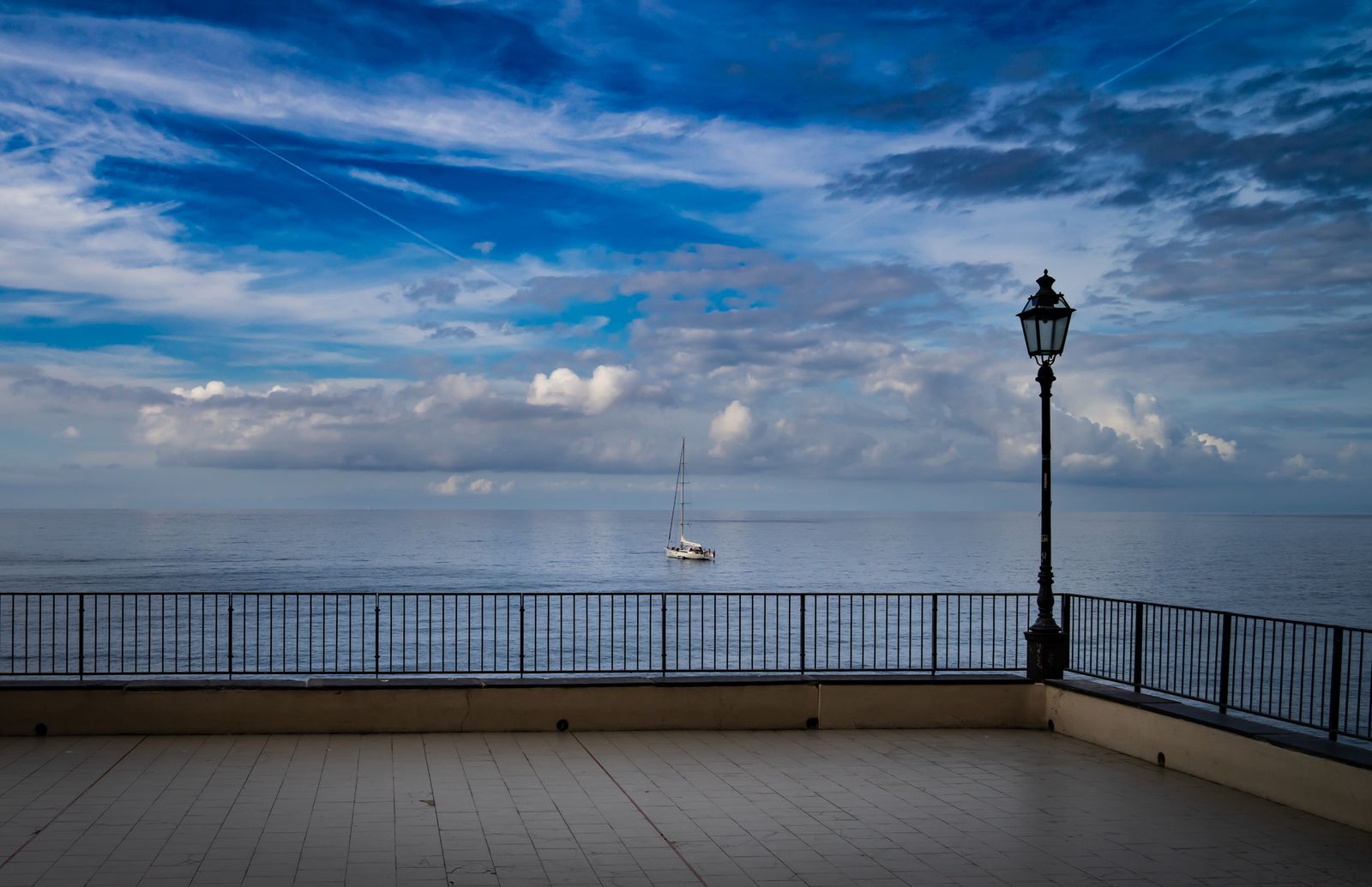
Photo by Catalin Buescu on Pexels
A post cap needs a flat square top of the right size to seat on. The set includes multiple bases covering nominal 4x4, 5x5 and 6x6 posts, matched to true top measurements from 3.5 to 5.5 inches across in wood, vinyl or plastic. That is a description of a timber or vinyl fence and deck post, and plenty of balcony railings are nothing like it.
| Railing type | Will a cap seat on it | What to do instead | |---|---|---| | Timber balustrade with 4x4 or larger newel posts | Yes, directly | Measure the true top and pick the matching base | | Vinyl or composite deck railing with square posts | Usually yes | Check the true top width, since some are under 3.5 inches | | Narrow steel or aluminum uprights | No. Too small and not square | Cap a timber corner post if there is one, or use the parapet | | Round metal tube handrail | No flat top | Add a short square timber block at a corner as a light mount | | Glass panel with channel fixing | No post tops at all | Use a planter, a parapet ledge or a freestanding timber post | | Masonry parapet wall | No, but the ledge is flat | Stand a capped timber post in a heavy planter against the wall |
The workaround that solves most terraces is a short square timber post set into a large planter you own. It gives you a correctly sized flat top, it needs no fixing to the building, and it can be moved to catch the sun.
Wind at height changes the risk calculation
Wind speed and turbulence increase with height, and a roof terrace on any exposed building sees gusts that a back garden never does. A cap that friction-fits perfectly at ground level is a different proposition four floors up.
The part that matters is not losing the cap. It is what a falling object does. A cap coming off an outward-facing rail above a street or a courtyard is a genuine hazard, and that single consideration should drive every placement decision on a balcony.
- Never place a cap on an outward-facing rail post where a fall would take it off the building.
- Keep caps on the inward side, on furniture-height posts, or on planter-mounted posts that sit back from the edge.
- If a cap must go on a rail post, tether it. A short loop of clear line or coated wire from inside the housing base to the rail below turns a falling object into a hanging one.
- Check the seating monthly rather than seasonally. Vibration at height loosens a friction fit faster than it does at ground level.
- Take caps in before a named storm. It takes two minutes and removes the whole problem.
Building rules, strata and what is visible from outside
Most apartment buildings, condo associations and managed blocks have rules about what may be attached to a balcony and what may be visible from the street. Lighting on a railing is usually treated as an external alteration if it is fixed, and as a movable object if it is not. That distinction is worth staying on the right side of.
A planter-mounted post is almost always the safe answer because it is furniture. A cap resting on an existing timber newel post is normally fine as well, since nothing is fixed and nothing is drilled. Anything screwed, bracketed or adhered to a rail is where objections start. If your building requires uniformity of appearance from outside, low warm light works in your favor rather than against it, since it is unobtrusive by nature.
Glare, neighbors and why low output is the right choice here
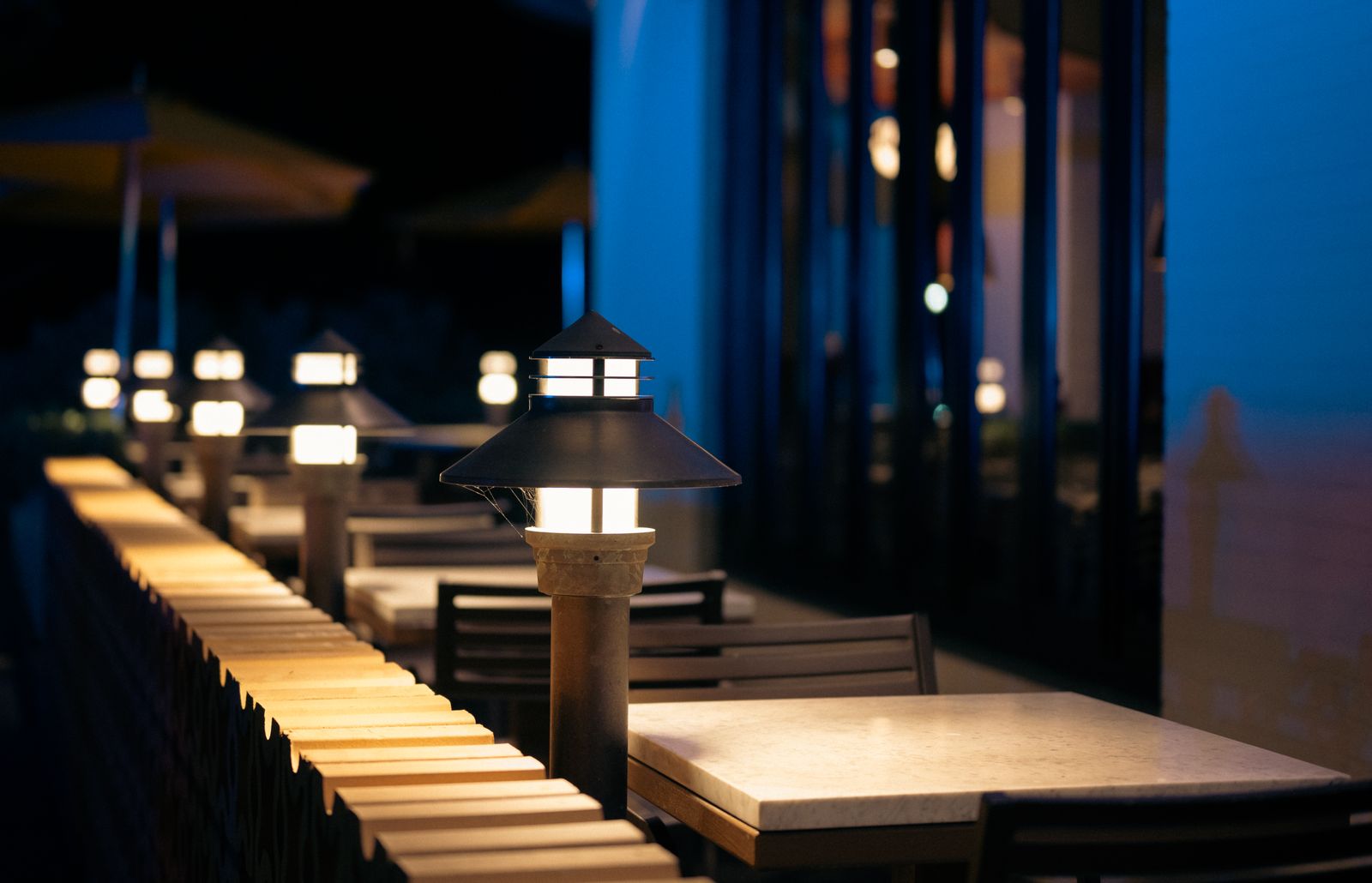
On a balcony you are much closer to other people's windows than you are in a garden, often at the same eye level. Anything bright and cool at railing height shines straight into a living room opposite, and that is the fastest way to make lighting a dispute rather than a pleasure.
Each cap emits 15 lumens from eight warm white SMD LEDs, spread across a 360 degree viewing angle, sitting on top of a post. That combination is close to ideal for a shared building: warm rather than clinical, low rather than dominant, and diffuse rather than beamed. It marks the edge of the terrace and lights the surface near it without projecting into anyone else's space. The reasoning behind warm output in outdoor settings is covered in more depth in why warm white suits post cap lights.
Profile is the other factor. On a terrace where you sit at the same height as the light, a tall unit is in your sightline all evening while a low one reads as a glow on the surface. The tradeoffs of shallower designs are discussed in the notes on low profile deck caps.
A practical setup sequence for a terrace
FAQ
Will these fit a metal balcony railing? Almost never directly. Metal uprights are too narrow and are rarely square, and the bases are sized for post tops from 3.5 to 5.5 inches. A short timber post in a heavy planter is the usual solution.
Is a roof terrace better for solar charging? Yes, usually much better. Open sky and no tree or building shade means a panel gets closer to the full six to eight hours of direct sun it wants, which is the main limitation at ground level.
Will the light bother the apartment opposite? At 15 lumens of warm white spread over a wide angle from post height, it is unlikely. Check the view from outside at night after fitting, and move any cap that reads as a point of glare from a neighbor window.
What about wind on a high balcony? Treat it as the main constraint. Keep caps away from outward-facing rail posts, tether anything on a rail, check seating monthly and bring units inside before a storm.
What to do next
Measure your railing post tops before anything else, since that one measurement decides whether this is a five-minute job or a planter project. Then walk to the far side of the terrace and identify every post where a fall would leave the building, and rule those out first.
Cover photo by 제이 박 on Pexels.