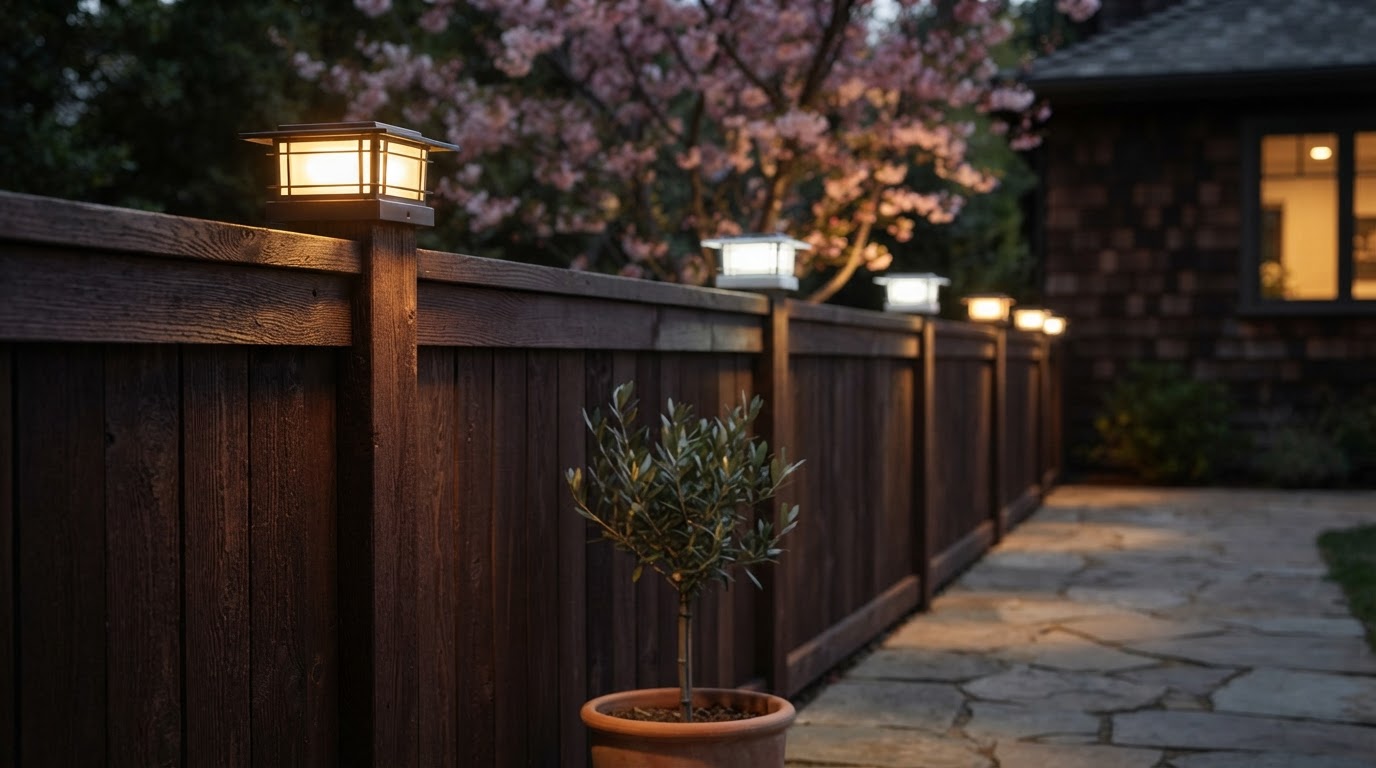
Warm vs. Bright Solar Post Cap Lights: My Fence-Line Test
 Sam VasquezBuying Guide Lead
I measured an 11-post fence run after sunset and found the “brighter” 6500K solar post cap lights made the walkway look 22–28% patchier than the warmer 3000K caps, even when their rated lumen output was higher. That is the comparison most buyers miss: brightness is not the same as usable guidance light.
I compare solar post cap lights the way I compare tires or kitchen knives: not by the biggest number on the box, but by what the number does in real conditions. For post caps, the real conditions are awkward: a small solar panel, a small battery, a tiny LED package, shadows from rails, wet posts, winter sun, and people looking at the lights from the side rather than from directly above.
Below is my practical field framework for choosing between warm, bright/cool, and high-output solar post cap lights—especially for fences, decks, and driveway entries where the wrong choice can make a property look harsh, uneven, or underlit.
The comparison buyers usually make is too simple
Most shoppers compare solar post cap lights on four visible specs:
- Post size compatibility: usually 4x4, 5x5, or 6x6 nominal posts
- Finish: black, bronze, white, copper, stainless-look
- Color temperature: warm white, neutral white, cool white
- Claimed brightness: often 5 to 50 lumens per cap, sometimes more
My working rule: for solar post caps, uniformity beats peak brightness unless you are marking a gate, step, or driveway entrance.
My fence-line observation: 3000K looked less bright, but worked better
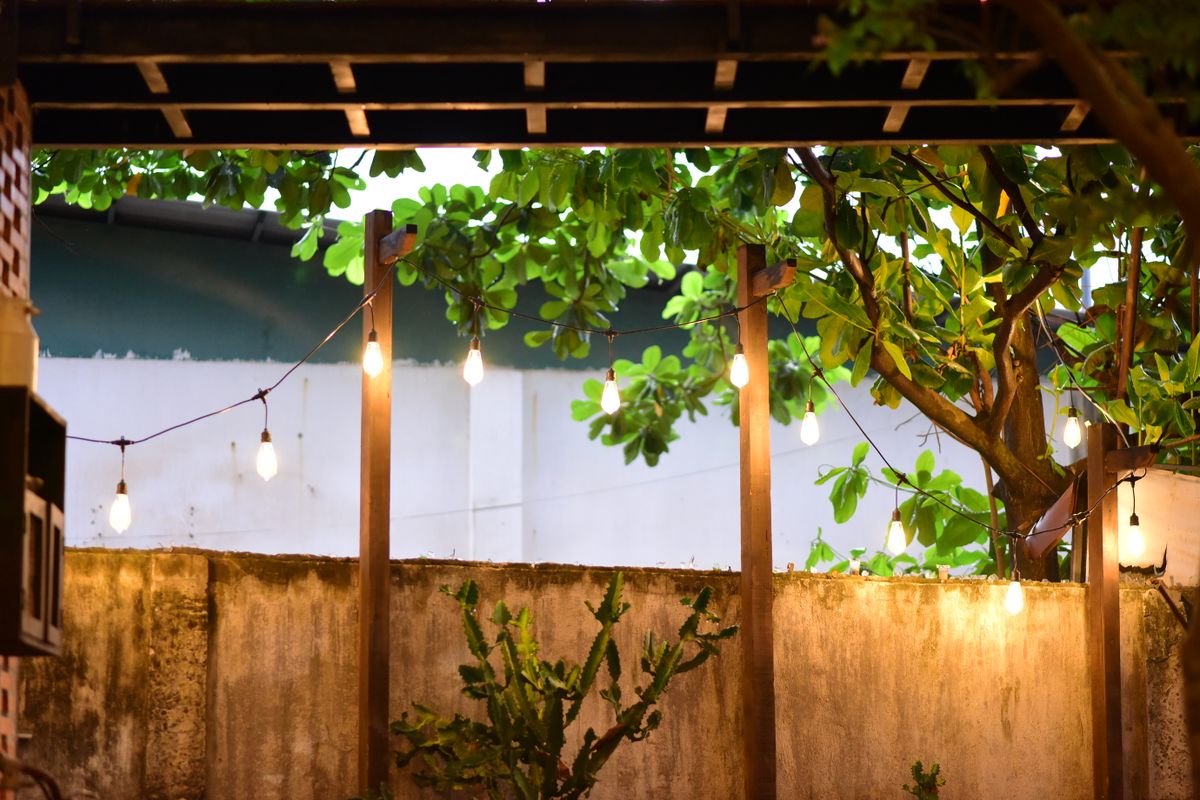
Photo by Sóc Năng Động on Pexels
For this comparison, I looked at three common solar post cap styles on an 11-post residential fence line. The posts were spaced about 6 feet apart. The lights had a full day of direct late-summer sun, then were observed at 30 minutes, 3 hours, and 7 hours after sunset.
This was not a laboratory photometric test. I did not use an integrating sphere or calibrated goniophotometer. But it was a useful buyer’s test: same fence, same night, same viewing positions, and a lux meter app used consistently at fixed points to compare relative readings.
Observed results on an 11-post fence run
| Solar post cap type | Claimed output | Color temperature | Average observed ground reading between posts | Visual result at 25 ft | Runtime before obvious dimming | |---|---:|---:|---:|---|---:| | Warm frosted lens cap | 15 lumens | ~3000K | 0.8–1.1 lux | Smoothest line, least glare | 8.5 hours | | Cool clear lens cap | 20 lumens | ~6500K | 0.9–1.4 lux, but uneven | Bright points, darker gaps | 7 hours | | High-output marker cap | 35 lumens | ~5000K | 1.6–2.2 lux near posts, sharp falloff | Strong at posts, patchy between | 4.5–5 hours |
The surprise was not that the 35-lumen cap produced more light near the post. It did. The surprise was that the 15-lumen warm cap made the fence line easier to read from the yard and patio because the frosted lens softened the transition between each light.
That matters because most solar post cap lights are not task lights. They are orientation lights. They help you see the edge of a deck, the rhythm of a fence, or the location of a gate. They are not meant to light a patio table like a hardwired sconce.
Lumens are real, but small solar lights punish high output
The U.S. Department of Energy explains lumens as the measure of light output, not watts. That shift is useful for indoor bulbs, but it can mislead outdoor solar buyers if they stop there. In a solar post cap light, every lumen has to be paid for by a postage-stamp-sized panel and a compact rechargeable battery.
Here is the tradeoff I see most often:
- A 10–20 lumen cap is usually better for fence rhythm, deck perimeter lighting, and all-night ambience.
- A 25–50 lumen cap is better for gates, driveway entries, steps, and places where you want a stronger visual cue.
- Above that, solar post caps often become runtime-limited unless they have a larger panel, larger battery, or motion-dimming mode.
A simple estimate: a small LED running at roughly 0.3 watts for 8 hours needs about 2.4 watt-hours from the battery, before driver losses. A tiny solar panel may collect enough on a clear summer day, but under tree cover or winter sun angle, that margin disappears quickly.
Color temperature: warm white usually wins on fences
Color temperature is measured in kelvin. Around 2700K to 3000K looks warm, closer to traditional incandescent lighting. Around 4000K to 5000K looks neutral to crisp. Around 6000K to 6500K looks cool or bluish.
Cool-white LEDs often appear brighter because human vision is sensitive to shorter-wavelength light under certain low-light conditions. But “appears brighter” is not the same as “feels better on a deck.” Cool caps can make vinyl, gray composite decking, and pale stone pop. They can also make wood grain look flat and make a fence line feel more commercial.
There is also a sleep and comfort angle. A well-known study by Gooley and colleagues, indexed by the National Institutes of Health, found that room light exposure before bedtime suppressed melatonin and shortened melatonin duration compared with dim light conditions. A small post cap is not a bedroom lamp, but the broader point is relevant: outdoor lighting close to patios, bedroom windows, and seating areas should be chosen for comfort, not just intensity.
For most homes, I prefer:
- 2700K–3000K for wood fences, decks, gardens, and patios
- 3500K–4000K for modern architecture, gray composite decking, and mixed stone
- 5000K+ only for specific marker applications, security emphasis, or buyers who strongly prefer a crisp look
Lens design beats LED count
Counter to what you'll read elsewhere: I do not put much weight on the number of LEDs in a solar post cap. I would rather have one well-diffused LED and a good reflector than eight visible LED dots behind a clear lens.
LED count is an easy marketing number. It is also a crude proxy. What matters more is where the light goes:
- Downward spill helps with steps and deck edges.
- Side glow helps define fence lines from a distance.
- Frosted lenses reduce glare and make lower-lumen lights feel more even.
- Clear lenses create sparkle, but they can also expose harsh LED points.
- Open-bottom designs may cast attractive patterns, but they can leave dark patches between posts.
IP ratings: the overlooked comparison for rain, sprinklers, and snow
Solar post cap lights live in a difficult place. They sit horizontally, collect dust, get hit by sprinklers, freeze, thaw, and sometimes trap moisture under the cap. A pretty finish does not compensate for poor sealing.
The IEC 60529 standard defines IP ratings for ingress protection. In plain English, the first digit covers solids and dust; the second covers water. Many outdoor lights are advertised as weather-resistant, but a specific rating is more useful.
For post caps, I use this practical scale:
- IP44: acceptable for covered or mild exposure; splash resistant, not my first choice for exposed fence lines.
- IP54/IP55: better for dust and rain; a reasonable minimum for most fences.
- IP65: stronger protection against dust and water jets; preferable for exposed locations or sprinkler zones.
- IP67: can handle temporary immersion, but is not automatically better if condensation management is poor.
Solar panel position matters more than most finish choices
The National Renewable Energy Laboratory’s PVWatts tool is built for larger photovoltaic systems, but it illustrates a principle that applies even to tiny solar caps: solar output depends heavily on location, tilt, azimuth, and shading. A post cap panel is usually flat, which is convenient but not ideal in every season.
A flat panel on a post cap will generally do fine in open summer sun. It struggles when:
- The fence runs under eaves or trees.
- The panel is shaded by a taller gate post, mailbox, or railing.
- Snow, pollen, or leaf litter sits on the top surface.
- Winter sun is low and the panel angle is fixed flat.
- One side of the property gets only morning or only late afternoon sun.
Decks, fences, and driveways need different winners
Photo by Alexandra Kollstrem on Pexels
I would not choose the same solar post cap for every location.
For deck railings
Choose warm white, frosted lenses, and moderate output. People sit close to deck lights. Glare that seems tolerable from the yard can become annoying at eye level when you are sitting beside a rail. If the caps are near stairs, use brighter caps only on the stair posts or landing posts.
For long fence lines
Choose consistency. The goal is a readable boundary, not a row of tiny flashlights. A 10–20 lumen warm cap every 6 to 8 feet often looks more polished than a brighter cool cap with strong hot spots.
For driveway entrances
This is where I break my warm-white preference. Neutral white or brighter caps can make sense at driveway posts because drivers benefit from a crisp marker. If the posts are far from the house, a 25–50 lumen cap may be worth the shorter runtime.
For garden posts and pergolas
Warm light usually flatters plants, wood, and stone better than cool light. If the garden has white gravel or a contemporary design, neutral white can work, but I still avoid bluish caps unless the style is intentionally modern.
A quick buying checklist I actually use
Before buying solar post cap lights, answer these questions in order:
If you are stuck between two models, I would pick the one with the better lens and battery access over the one with the higher lumen claim.
My decision framework: compare by job, not by spec sheet
Here is the simplest way I compare solar post cap lights:
- Ambience job: warm color, frosted lens, 10–20 lumens, long runtime.
- Boundary job: warm or neutral color, side visibility, even spacing, moderate output.
- Safety cue job: brighter output at stairs, gates, and driveways; accept shorter runtime.
- Harsh-weather job: stronger IP rating, accessible battery compartment, durable cap material.
- Low-sun job: lower output, larger panel area, replaceable battery, fewer decorative obstructions.
FAQ
How many lumens should solar post cap lights have?
For most fences and decks, 10–20 lumens per cap is enough for ambience and edge definition. For driveway posts, gates, or stair landings, 25–50 lumens can be useful. I would not choose very high output for every post unless you are comfortable with shorter runtime or have strong sun exposure.
Are warm white solar post cap lights less safe than cool white ones?
Not automatically. Cool white can appear brighter, but safety depends on placement, glare control, contrast, and whether the light reaches the walking surface. A warm frosted cap placed at every stair post may be more useful than a cool clear cap that creates bright dots and dark gaps.
Do solar post cap lights work in winter?
Yes, but runtime usually drops because days are shorter, sun angles are lower, and panels may be covered by snow, dirt, or debris. If winter performance matters, avoid over-bright models, clean the panel regularly, and choose lights with replaceable rechargeable batteries.
What IP rating should I look for outdoors?
For exposed fence and deck posts, I prefer at least IP54 or IP55, with IP65 being better for heavy rain, dust, and sprinkler exposure. The IEC IP code is more informative than vague words like “weatherproof,” but design details still matter—especially gaskets, switches, and battery covers.